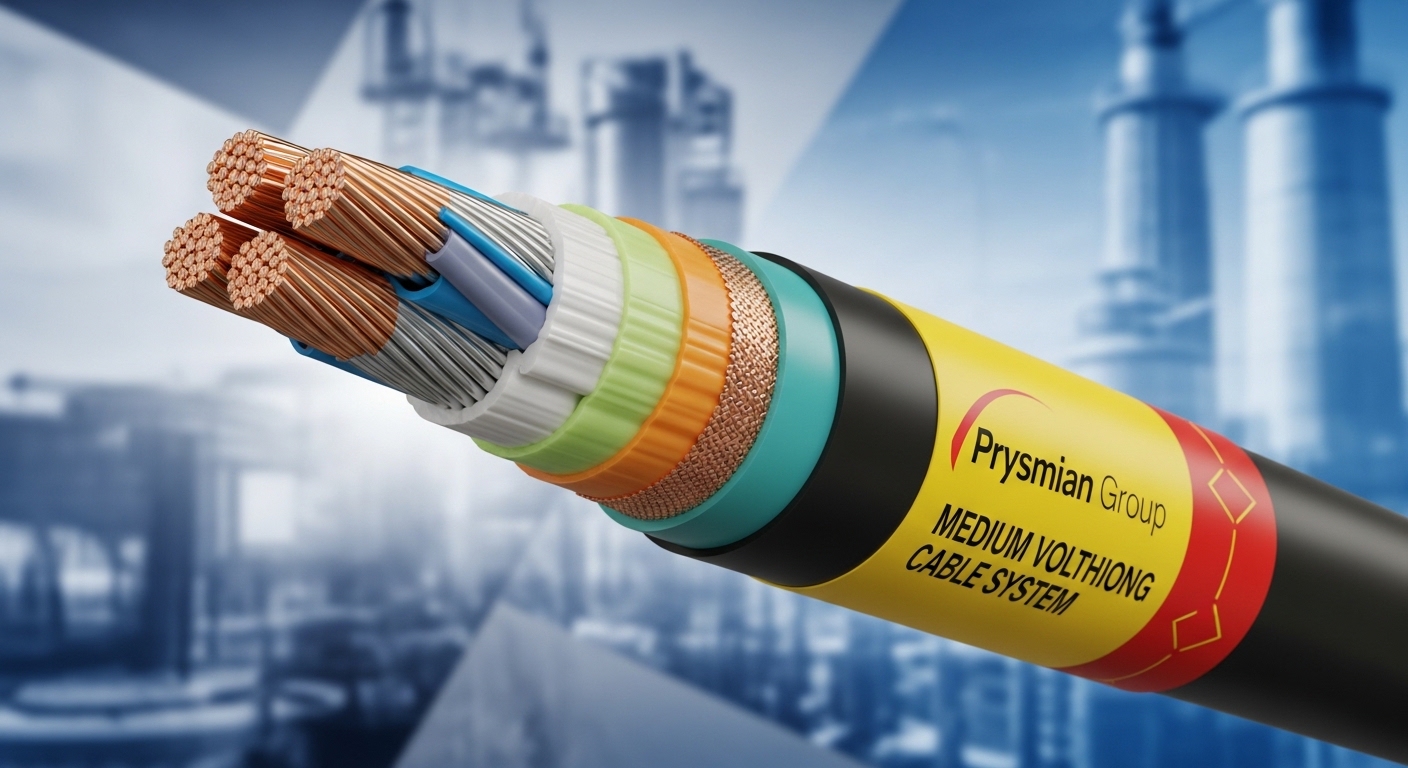
Prysmian Group’s medium voltage cable systems are built with XLPE insulation to deliver lower dielectric losses, superior moisture resistance, and higher current-carrying capacity than traditional designs. You’ll find product lines engineered for utility grids, commercial buildings, and harsh industrial environments, all backed by IEC, UL, and CENELEC certifications.
They’ve proven reliable in substations, chemical facilities, and underground networks worldwide. Keep investigating to find everything you need to select the right cable for your application.
Prysmian Medium Voltage Cable Construction and Performance Advantages
Prysmian’s medium voltage cables are built with a cross-linked polyethylene (XLPE) insulation system that outperforms traditional EPR and PILC designs in nearly every measurable category. You’ll get lower dielectric losses, superior moisture resistance, and higher current-carrying capacity without sacrificing flexibility.
Prysmian engineers the conductor screens, insulation screens, and metallic shields to precise tolerances, eliminating partial discharge at stress concentration points. The result is a cable that maintains electrical integrity under thermal cycling, fault conditions, and decades of continuous load.
Whether you’re deploying underground distribution, industrial feeders, or building power systems, Prysmian’s construction gives you measurable performance advantages from day one.
Medium Voltage Cable Product Lines for Utilities, Buildings, and Industry
Those construction advantages are baked into a product lineup that Prysmian has built to address distinct market demands.
For utilities, you’ll find underground distribution cables engineered for grid reliability and long service life.
Commercial and industrial buildings get low-smoke, flame-retardant options that meet strict fire safety codes.
Industrial facilities handling harsh environments benefit from cables rated for chemical exposure, mechanical stress, and continuous high loads.
Each product line aligns with regional standards like IEEE, IEC, and ICEA, so you’re not retrofitting compliance after the fact.
Prysmian structures this portfolio so you can match the right cable to the right application without compromise.
How Prysmian Medium Voltage Cables Hold Up in Real Applications
Real-world performance separates a cable spec sheet from a cable that actually delivers. Prysmian medium voltage cables have proven themselves across utility substations, industrial plants, and commercial buildings where downtime isn’t acceptable.
You’ll find their systems handling voltage fluctuations, moisture exposure, and mechanical stress without degrading prematurely. Field installations confirm consistent performance across XLPE and EPR insulated designs, even in demanding environments like chemical facilities and underground utility networks.
Third-party testing and decades of global deployments back these results. When you specify Prysmian, you’re choosing a cable with a documented track record, not just a promising data sheet.
IEC, UL, and Key Certifications Prysmian MV Cables Carry
When you source medium voltage cables for critical infrastructure, certifications aren’t a formality—they’re proof that the product meets independently verified performance and safety standards.
Prysmian MV cables carry IEC 60502 and IEC 60840 certifications, covering insulation integrity, voltage rating, and thermal performance. UL listings apply to North American markets, confirming compliance with ICEA and AEIC specifications. Many products also meet CENELEC standards for European utility applications.
These certifications validate dielectric strength, short-circuit performance, and flame resistance across product lines. When you specify Prysmian cables, you’re selecting products that regulators, utilities, and inspectors already recognize as tested and compliant.
How to Choose the Right Prysmian Medium Voltage Cable
Certifications confirm a cable meets baseline standards, but selecting the right Prysmian MV cable for your specific application requires matching product characteristics to your project’s actual demands.
Start by identifying your voltage rating, conductor size, and installation environment—underground, aerial, or indoor.
Consider insulation type: XLPE suits most modern installations, while EPR offers flexibility in tight conduits.
Factor in thermal ratings if you’re handling high load cycles.
Check whether your project needs armoring for mechanical protection or special jacketing for chemical exposure.
Ultimately, consult Prysmian’s technical datasheets and regional specialists to confirm your selection aligns with local grid codes and standards.
Frequently Asked Questions
What Is the Typical Lead Time for Ordering Prysmian Medium Voltage Cables?
You’ll typically wait 8 to 16 weeks for Prysmian medium voltage cables, depending on your order size, cable specifications, and current production demand.
Contact your local Prysmian representative directly to get an accurate lead time for your specific project.
Does Prysmian Offer Custom Cable Lengths for Specific Project Requirements?
Yes, Prysmian does offer custom cable lengths tailored to your specific project requirements.
You can work directly with their sales team to specify exact lengths, ensuring you receive precisely what your installation needs without unnecessary waste.
What Warranty Terms Does Prysmian Provide for Medium Voltage Cable Systems?
Prysmian’s warranty terms for medium voltage cable systems aren’t publicly standardized—you’ll need to contact their sales team directly.
They’ll provide project-specific warranty details based on your application, region, and applicable industry standards.
How Does Prysmian Handle Medium Voltage Cable Repairs or Replacements After Failure?
If your medium voltage cable fails, you’ll need to contact Prysmian’s technical support team directly.
They’ll assess the failure, determine warranty coverage, and coordinate repairs or replacements based on your specific installation conditions and contract terms.
Where Are Prysmian Medium Voltage Cables Manufactured and Distributed Globally?
You’ll find Prysmian’s medium voltage cables manufactured across facilities in Europe, North America, Asia-Pacific, and Latin America.
They distribute globally through regional warehouses and local partners, ensuring you receive timely delivery wherever your project’s located.
Conclusion
Whether you’re powering a utility grid, outfitting a commercial building, or keeping an industrial facility running, you’ll find a Prysmian medium voltage cable that fits your application. You’ve seen how their construction, certifications, and real-world performance set them apart. Now it’s time to match those specs to your project’s demands. Use the selection criteria covered here, and you’ll confidently choose a cable system built to last.