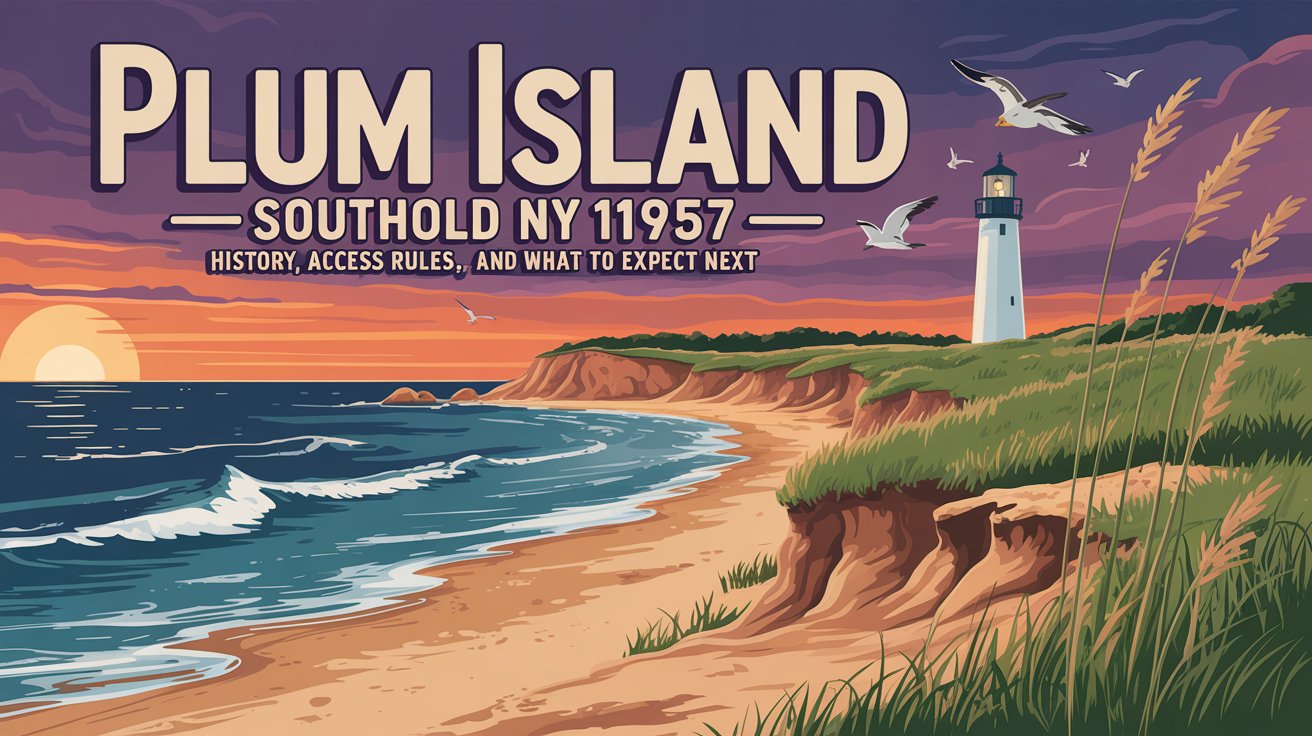
Plum Island Southold NY 11957 is a federally owned island just off the tip of Long Island that’s best known for the Plum Island Animal Disease Center and its historic lighthouse. It is not open for general public access right now, though plans and proposals for conservation and limited public use are actively discussed.
Where exactly is this place and why the zip code?
Plum Island sits in Long Island Sound, northeast of Orient Point and within Southold’s postal area. The lab and facilities on the island use the 11957 ZIP code linked to that region.
The island covers roughly 840 acres and has its own service infrastructure because it was built as a secure federal site. That scale explains the separate facility addresses and why it appears on regional maps.
People often mix it up with other Plum Islands on the East Coast. This one is the federal property closely tied to research and to the town of Southold.
What’s on Plum Island today?
The most visible feature is the Plum Island Animal Disease Center, a research facility established in the 1950s to study contagious livestock diseases. It operated under USDA and later under DHS partnerships.
There’s also the Plum Island Light Station, a historic granite lighthouse dating back to the 19th century that’s listed on the National Register of Historic Places. You can see the light from the water but landing is restricted.
Scattered across the island are old military structures from Fort Terry, service buildings, and large undeveloped saltmarsh and dune habitats that matter to birdlife. The mix of infrastructure and habitat is unusual for a place so close to populated Long Island.
Can the public visit Plum Island Southold NY 11957?
Right now, public access is highly restricted because of the research mission and safety protocols. Tours used to be more common, but routine public visits ended years ago. Only authorized personnel and vetted groups get on the island.
That said, stakeholders and conservation groups have sometimes been allowed supervised visits for ecological surveys or preservation planning. These are exceptions, not the rule.
If you want to experience Plum Island, the realistic options are to view it from boats, beaches on nearby Orient Point, or attend public events or talks hosted by preservation groups. Those approaches let you appreciate the lighthouse and shoreline without setting foot on the island.
Why people care so much about this island
The island ties together national biosecurity, local history, and important coastal ecology. That combination fuels public interest and debate over its future.
Its secretive past added mystery and controversy, which made Plum Island a recurring topic in regional politics and conservation campaigns. People want to protect the habitat while honoring historical sites.
Local groups and national organizations have proposed preserving most of the island as a refuge and creating controlled public access to the lighthouse and fort sites. Those proposals guide current negotiations.
The near-term future: what to expect
The federal government has been planning to relocate research operations to a new facility in Kansas and to decommission many activities on Plum Island. That process is advancing and has prompted proposals for transfer or conservation conveyance.
Multiple bills and preservation plans aim to keep the island from private development and to open parts for education and passive recreation. Any real change will take time and formal agreements.
Conservation groups see a win if the island becomes a managed natural and historical area with limited, well-run visitor access. Officials still need to sort legal, environmental, and logistical hurdles first.
If you enjoy learning about exclusive, restricted, or high-profile locations, you may also find it interesting to explore how curated travel experiences work in places like Luxury Villas Ibiza Le Collectionist, where privacy and control matter just as much as location.
Practical tips if you want to see or learn more
Head to Orient Point and Southold viewpoints for the best shoreside vistas of Plum Island. Small boat tours and local charters often pass by the island. Bring binoculars for the lighthouse and birdlife.
Follow the work of local preservation groups and county announcements if you want the earliest alerts about public tours, visitor centers, or official changes in access. Those organizations often publish updates and guided event listings.
If you are researching the island, consult DHS and historical records for accurate technical data and the Nature Conservancy or Preserve Plum Island Coalition for ecological plans and vision documents. These sources give a balanced picture of science, history, and conservation.
Final takeaway
Plum Island Southold NY 11957 sits at the intersection of science, history, and conservation. It is mostly closed to the public now, but careful plans exist to protect the island and to potentially allow limited public experiences in the future. Watch local announcements and conservation groups if you want to stay informed.
Clear naming matters with geographic locations, and if you have ever wondered about correct place-name formatting, the discussion around Lake Texoma Should Be Capitalized offers a useful perspective on how locations are officially written and recognized.