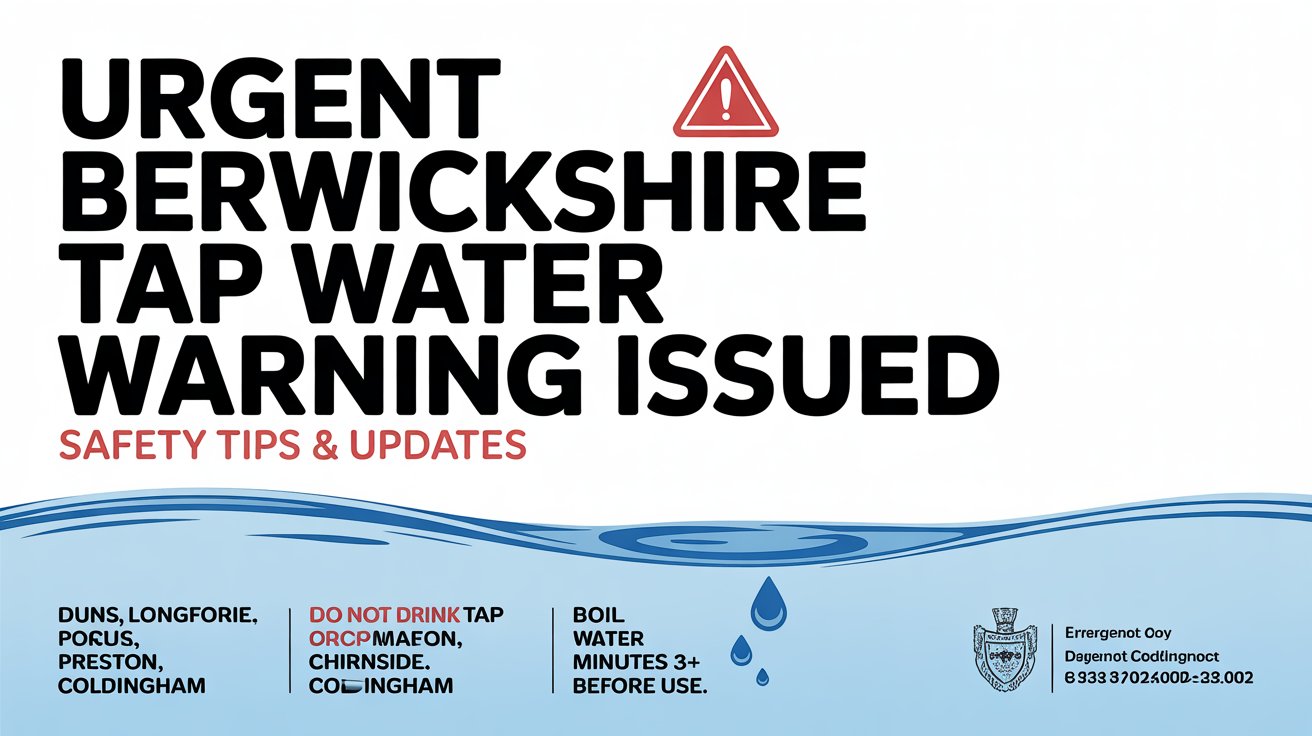
Residents in Berwickshire were told not to drink tap water due to a fault at a local treatment works.
Water quality dropped below safe standards, and emergency supplies were provided.
Urgent Berwickshire Tap Water Warning Explained
An official warning was issued in Berwickshire after a serious fault at the Rawburn Water Treatment Works. This fault affected the safety of drinking water in several areas.
Authorities confirmed that water quality fell below normal standards.
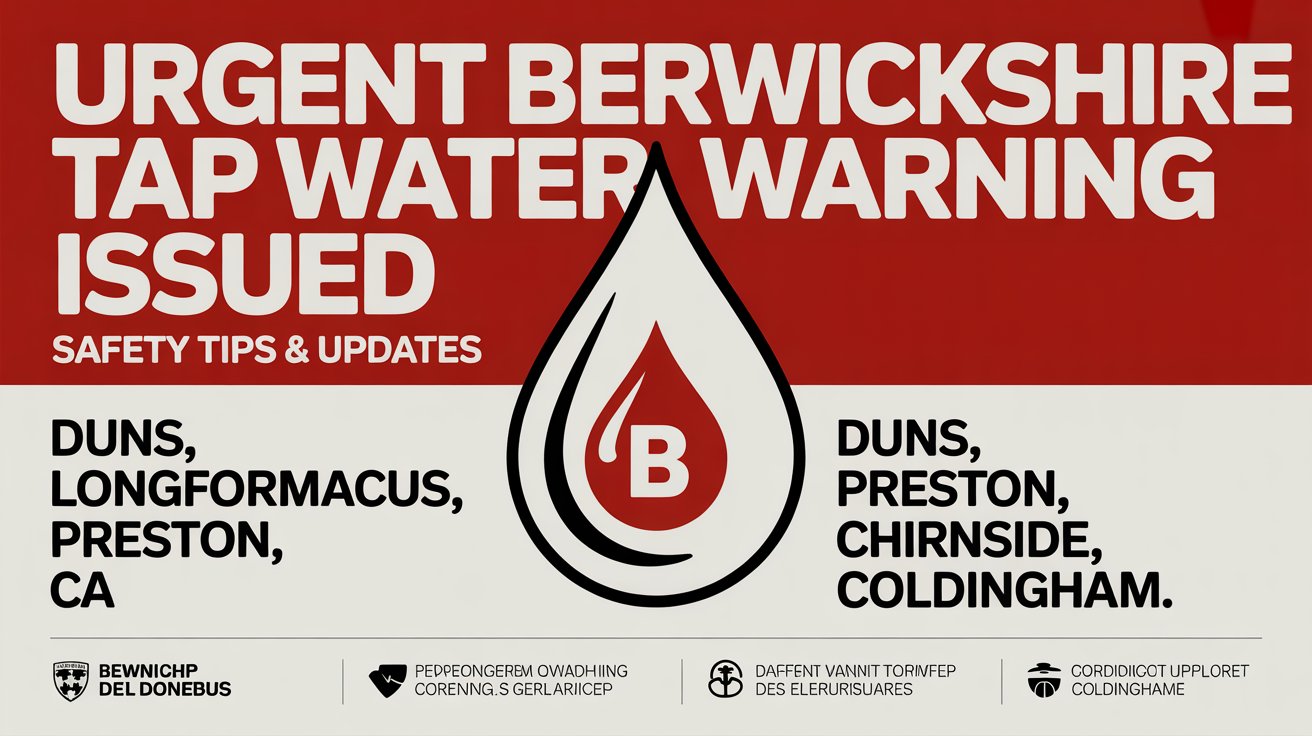
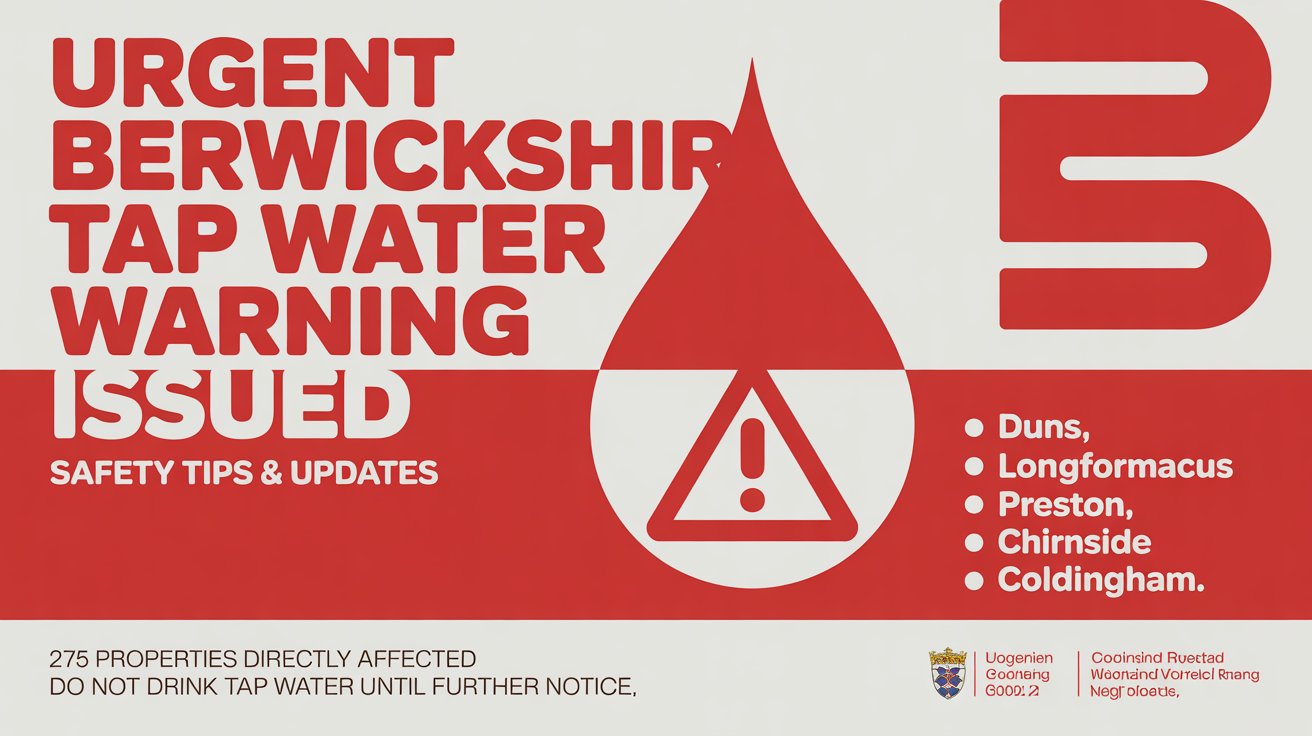
Key affected areas included:
- Duns
- Longformacus
- Preston
- Chirnside
- Coldingham
Around 275 properties were directly impacted in the early stage.
In wider disruption cases, thousands of homes experienced supply issues or complete outages.
Why the Tap Water Was Unsafe
The main cause was damage or failure inside the treatment system.
Key technical issues included:
- Fault in treatment processes
- Possible contamination risk
- Drop in filtration quality
- Network pressure imbalance
Authorities clearly stated that water did not meet usual safety standards.
This type of issue can allow:
- Bacteria presence
- Chemical imbalance
- Sediment or debris entry
Even if water looks clear, it may still be unsafe to drink.
A similar emergency fault was recently reported at Arkleston Road Renfrew, highlighting the importance of monitoring local water treatment systems closely.
Areas and Households Affected
The impact varied by location.
| Area | Issue Type | Severity |
|---|---|---|
| Duns | No water or unsafe water | High |
| Longformacus | Do not drink notice | High |
| Preston | Supply disruption | Medium |
| Chirnside | Low pressure | Medium |
| Coldingham | Intermittent supply | Medium |
In some cases:
- Homes had no water at all
- Others had low pressure
- Some had water but unsafe to drink
Emergency teams worked to restore normal supply step by step.
Official Safety Instructions for Residents
Authorities issued clear instructions to protect public health.
Do Not Use Tap Water For:
- Drinking
- Cooking
- Making ice
- Brushing teeth
Limited Use Allowed:
- Toilet flushing
- Cleaning surfaces
- Laundry
Always follow official updates before resuming normal use.
Emergency Water Supply Measures
To support residents, emergency systems were activated.
Key actions included:
- Bottled water delivery to homes
- Public collection points
- Water tankers in affected areas
A major collection point was set up at Berwickshire High School.
Priority support was given to:
- Elderly residents
- Medical needs households
- Vulnerable individuals
Step-by-Step Safety Tips for Households
Follow these steps during any water warning:
1. Use Bottled Water Only
Use sealed bottled water for all drinking and cooking needs.
2. Avoid Boiling Unsafe Water
Boiling does not always remove chemical risks.
3. Store Clean Water Properly
Keep bottled water in a cool and clean place.
4. Maintain Hygiene Carefully
Use bottled or boiled water for:
- Brushing teeth
- Washing food
5. Monitor Official Updates
Check updates from local authorities or water providers.
Health Risks Linked to Unsafe Tap Water
Unsafe water can lead to several health issues.
Common risks include:
- Stomach infections
- Diarrhea
- Vomiting
- Bacterial exposure
In rare cases, waterborne bacteria like Legionella may grow in stagnant systems.
High-risk groups include:
- Elderly people
- Children
- People with weak immune systems
What Caused the Supply Disruption
The incident started due to infrastructure failure.
Main contributing factors:
- Damage to pipes or treatment systems
- High demand on limited storage
- Network instability during repairs
Engineers had to:
- Repair damaged sections
- Clean storage tanks
- Restart the system gradually
This slow process prevents further contamination or system shock.
How Authorities Responded
Water authorities took immediate action.
Response steps included:
- Issuing “do not drink” alerts
- Deploying repair teams
- Delivering bottled water
- Setting up emergency pipelines
Teams worked continuously to restore supply safely.
Local support also included volunteers helping distribute water.
For residents managing essential services, official guidance like the Cardholder Services Letter Jacksonville Florida 32255 provides critical updates during service interruptions.
Timeline of the Incident
| Stage | Event |
|---|---|
| Day 1 | Fault detected at treatment works |
| Day 2 | Warning issued to residents |
| Day 3 | Emergency water distribution started |
| Day 4 | Partial restoration of supply |
| Day 5+ | Gradual return to normal service |
Some areas remained affected for several days due to system complexity.
Long-Term Water Safety Concerns in Berwickshire
Environmental conditions also play a role in water safety.
Recent reports showed water scarcity in parts of eastern Scotland, including Berwickshire.
This can lead to:
- Lower water reserves
- Increased pressure on systems
- Higher risk of faults
Water systems require strong maintenance during such conditions.
Signs Your Tap Water May Be Unsafe
Watch for these warning signs:
- Unusual smell
- Cloudy or discolored water
- Sudden pressure drop
- Official alerts from authorities
If any of these appear:
- Stop using tap water immediately
- Switch to bottled water
- Report the issue
How to Stay Updated During Water Warnings
Reliable sources include:
- Local council announcements
- Official water authority websites
- Emergency SMS alerts
Avoid relying on rumors or unverified social media posts.
Key Prevention Measures for Future Safety
Households can reduce risks by:
- Keeping emergency bottled water
- Maintaining home plumbing systems
- Reporting leaks or pressure issues early
- Following official safety advice strictly
Water authorities continue to upgrade systems to prevent similar incidents.