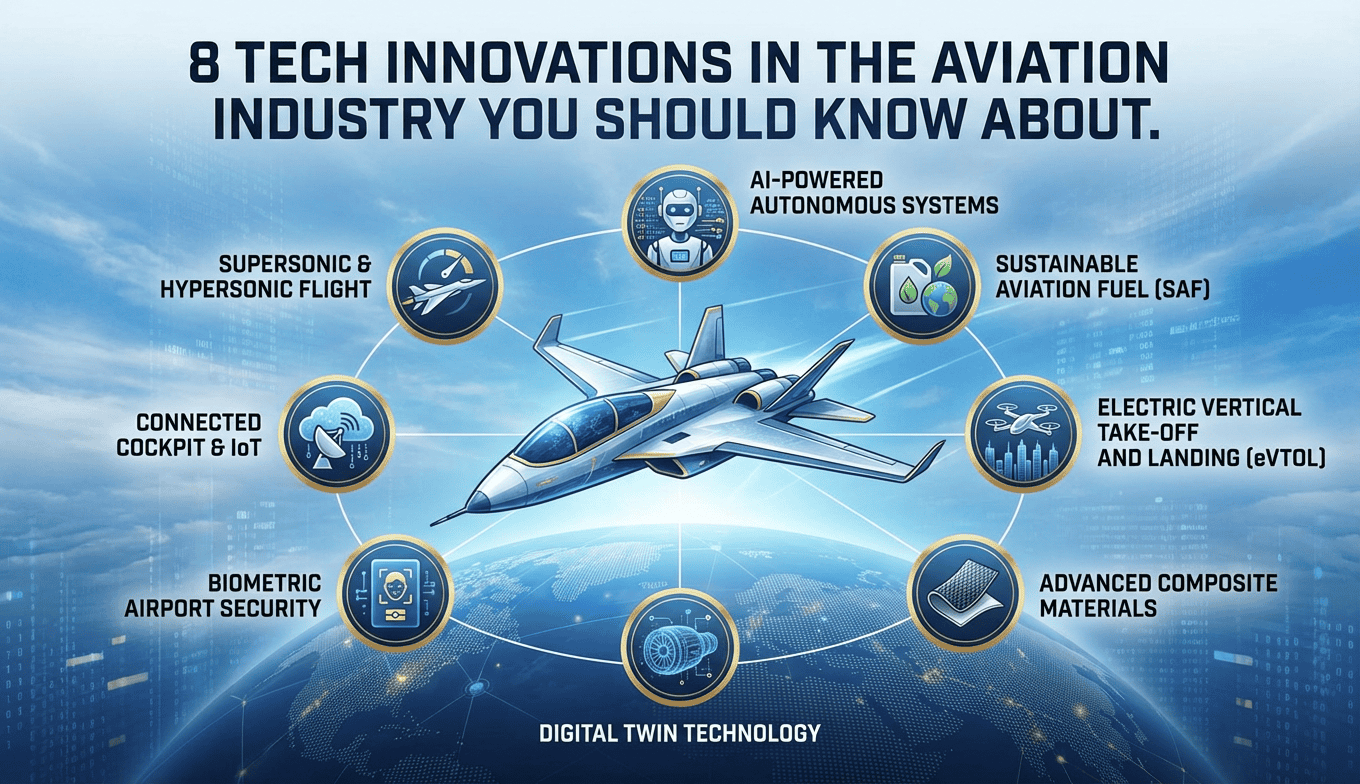
Innovation is vital in enhancing safety measures and flight efficiency throughout the industry. You can hardly ignore the growth in the technological field in the aviation sector in recent times. The advances in technology have increased to ensure that the flying experience of airline passengers is more enjoyable as they become smarter.
Electric and Hybrid Aircraft
Electric and hybrid aircraft offer an incredible shift from conventional jet fuel engines by using electric engines or a combination of both. This is highly helpful to the environment since these aircraft can generate fewer emissions and carbon footprint. These innovations do not cause much noise pollution to airports, which further means that noise pollution will be minimal, therefore rendering the surrounding vicinities more habitable. These planes facilitate quicker and more effective short travel transportation as they can easily take off and touch down, as well as have agility.
Autonomous Flight Systems
With the emergence of autopilot and advanced AI control systems in autonomous flight systems, the landscape of aviation is being revolutionized. These systems play a significant role in the reduction of pilot workload and in minimizing human operating errors. Several trials are being performed to get fully autonomous aircraft ready for commercial operations, especially in cargo and delivery services. Not only do autonomous systems save time and money, but they also enhance safety by monitoring the real-time condition of the aircraft and reacting to changes with the help of AI.
Advanced Air Traffic Management
The innovations in Advanced Air Traffic Management offer exceedingly sophisticated smart navigation systems. These systems are vitally relevant when managing crowded air spaces as they provide better tracking and guide the aircraft in real time. This mitigates the problem of flight delays and thus leads to the improvement of the overall schedule of flights. Improved coordination among airports and pilots is also witnessed through these systems, thereby leading to increased efficiency. Above all, the developed digital communications simplify the process of communication and prevent all the dangers related to the use of old radio systems.
Lightweight Materials and Structures
Lightweight materials are game-changing in contemporary aircraft designs owing to the usage of carbon composites and other advanced materials. These materials result in massive changes in fuel efficiency and the overall cost of flights. The lightness and strong nature of these materials make aircraft safer and stronger. Employment of this type of material also helps in extending the life of the important aircraft parts, thereby reducing the maintenance costs in the long term.
In-Flight Connectivity and Entertainment
Modern flights have in-flight entertainment systems as well as internet access that is becoming very advanced. The faster Wi-Fi connection that is currently being offered can be utilized and can be used to get access to the internet and stream and browse virtually anywhere in the airspace. The entertainment systems that are installed in many of the modern aircraft are personalized and can give the video, music and news that is specific to each individual passenger. Additionally, the introduction of real-time flight updates and travel applications provides a smooth means of staying updated regarding the flight status and other travel-related information.
Battery and Power Innovations
Battery and power innovations have a significant impact currently and in the future on aviation. New, more effective aircraft batteries are being used, which outlive traditional batteries and indeed are lighter and more powerful. The better designs allow for increased energy storage, which is crucial for electric aircraft, and provide more robust emergency backup power systems. It is recommended to use a top-rated gill battery that gives dependable specifications and the ability to power up innovative services.
Sustainable Fuel and Green Aviation
Availability of sustainable fuel and green aviation has restructured the way airline operations are being performed in favor of being eco-friendly. Alternative energy sources and biofuels are being implemented to reduce the negative impact of aviation on the environment and reduce carbon emissions. Several governments are providing incentives to encourage airlines to use these lesser known but environmentally sustainable fuels. Airlines are taking big monetary risks in innovation and modernization to drive sustainability in their fleets and make them greener.
Advanced Safety and Monitoring Systems
Advanced safety and monitoring systems are at the forefront of modern aviation safety. These systems make it possible to detect any problems in real-time by means of engine and system monitoring. There is also the adoption of predictive maintenance to be able to determine the failure likely to occur before it occurs. In addition, improved crisis management in the event of an emergency is ensured through improved emergency response systems, which would ensure a quick and coordinated response.
Conclusion
These eight inventions are effective icons of how aviation technology can greatly change the way. Electric, autonomous, and environmentally friendly innovations are indicative of a more enhanced security, efficiency and travelling experience. They all imply more focused sustainability and future-oriented solutions. Smart traffic control, use of light materials and better connectivity have made air travel faster, cheaper and smarter. The innovations are almost certain to show what the aviation industry will look like in the next decade, which will be futuristic and more exciting.