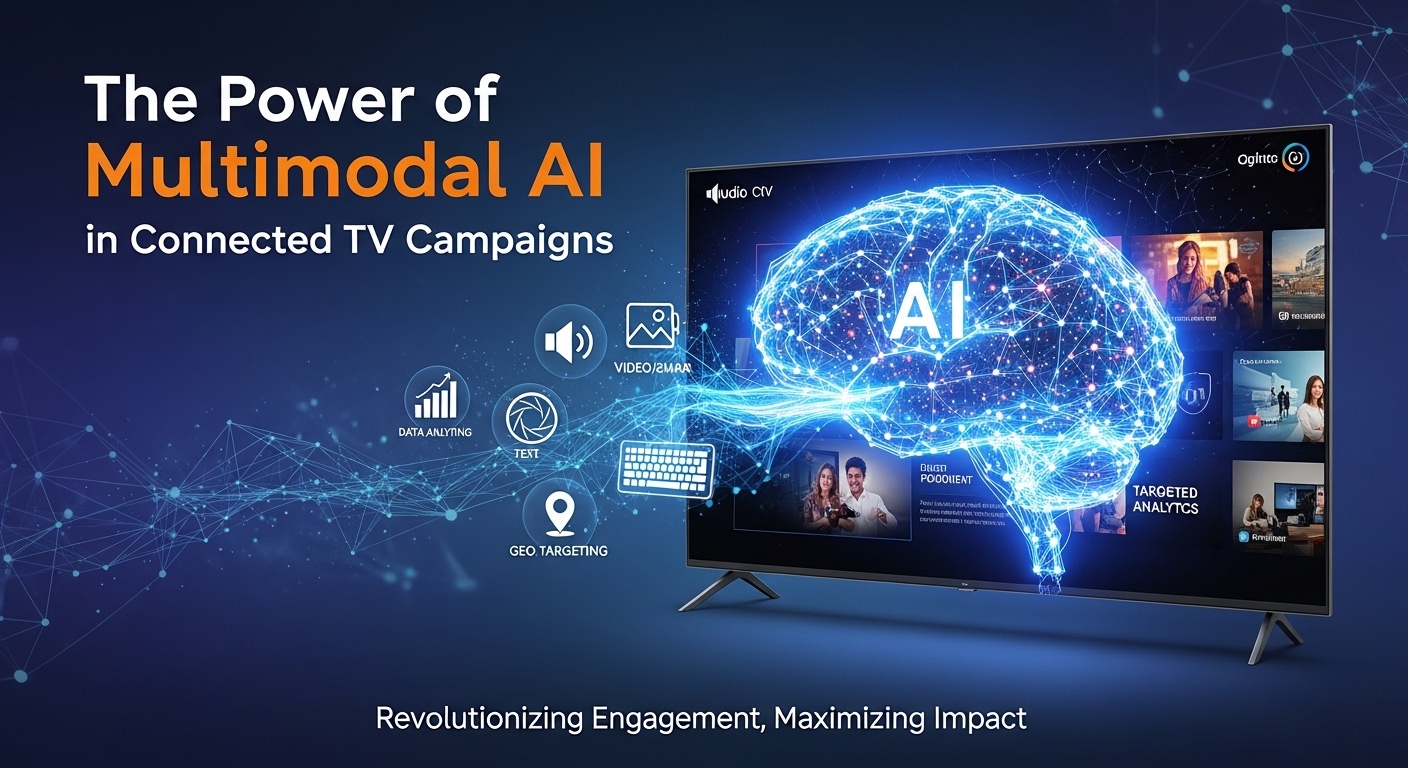
Multimodal artificial intelligence represents a groundbreaking advancement in how brands analyze and process diverse data types simultaneously to create more effective advertising strategies. Think of it as the difference between listening to a conversation with one ear versus experiencing it with all your senses engaged. Unlike traditional AI systems that focus on single data streams, multimodal AI integrates visual, audio, textual, and behavioral information to form comprehensive consumer profiles. This sophisticated approach enables advertisers to understand not just what audiences watch, but how they interact with content across multiple dimensions, capturing the full richness of viewer behavior.
Transforming Audience Targeting Through Multiple Data Streams
The revolution in connected TV advertising comes from the ability to merge disparate data sources into coherent targeting strategies that genuinely resonate with specific audience segments. Multimodal AI analyzes viewing habits alongside demographic information, purchase history, social media activity, and even sentiment expressed through voice-activated commands on smart devices. This comprehensive data fusion allows advertisers to move beyond basic demographic targeting toward psychographic and behavioral precision that actually predicts consumer intent. For instance, the technology can identify viewers who watch cooking shows, search for kitchen appliances online, and engage with food, related social content, creating a complete picture of purchase readiness that’s remarkably accurate.
Enhancing Creative Optimization With AI-Driven Insights
Multimodal AI doesn’t just improve who sees advertisements; it revolutionizes how creative content is developed and optimized for maximum impact. By analyzing viewer responses to different creative elements, imagery, messaging, music, pacing, and calls-to-action, the technology identifies which combinations drive the strongest engagement. This granular analysis extends to understanding how creative performance varies across different audience segments, times of day, and viewing contexts, revealing patterns that would take human analysts months to uncover. Advertisers can test multiple creative variations simultaneously, with AI systems automatically allocating impressions to top-performing versions while gathering insights about why certain approaches succeed where others fall flat.
Real-Time Campaign Optimization and Performance Measurement
The dynamic nature of connected TV environments demands advertising solutions that can adapt in real-time to changing conditions and performance signals. When optimizing campaigns across streaming platforms, professionals who need to leverage advanced audience insights rely on CTV advertising solutions that process vast streams of performance data instantaneously, making micro-adjustments to campaign parameters thousands of times per day. This continuous optimization considers factors like viewer engagement metrics, conversion signals, competitive activity, inventory availability, and cost fluctuations across different platforms and dayparts, essentially acting as a tireless campaign manager that never sleeps.
The technology can automatically shift budget allocation toward high-performing placements while reducing spend on underperforming inventory without human intervention, responding to market conditions faster than any manual process could achieve. Beyond simple performance metrics, multimodal AI tracks attribution across the entire customer journey, connecting connected TV exposure to downstream actions like website visits, app downloads, store visits, and purchases. This comprehensive measurement approach provides unprecedented visibility into how connected TV advertising influences consumer behavior across multiple touchpoints, creating a complete picture of campaign impact. Advertisers gain confidence in their investments through clear, data, driven evidence of campaign effectiveness, moving beyond traditional metrics like impressions and reach toward business outcomes that matter, the metrics that actually move the needle for brands.
Privacy, Compliant Personalization at Scale
As privacy regulations tighten and third-party cookies disappear, multimodal AI offers a path forward for personalized advertising that respects consumer privacy while maintaining effectiveness. The technology operates on aggregated, anonymized data patterns rather than individual tracking, creating audience segments based on behavioral similarities rather than personal identifiers. This approach aligns with emerging privacy standards while still delivering the precision targeting that makes connected TV advertising valuable, proving that privacy and performance aren’t mutually exclusive. Machine learning models can identify predictive patterns in first-party data, enabling personalization without relying on invasive tracking mechanisms that make consumers uncomfortable.
Conclusion
The integration of multimodal AI into connected TV advertising represents a fundamental shift in how brands reach and engage streaming audiences. By synthesizing diverse data streams into actionable insights, this technology enables unprecedented precision in targeting, creative optimization, and performance measurement that transforms campaign outcomes. As connected TV continues to capture viewing time from traditional linear television, advertisers who embrace multimodal AI capabilities will gain significant competitive advantages through more efficient spending and stronger campaign results. The future of television advertising lies in intelligent systems that understand audiences holistically, adapt continuously to changing conditions, and respect consumer privacy while delivering personalized experiences that drive meaningful business outcomes for brands across industries. It’s not just an evolution, it’s a revolution that’s already underway.