Formal weddings are one of those occasions that can make even the most fashion-confident person second-guess themselves. The stakes feel high, the expectations are real, and you’re walking a line between looking great and being appropriate. You want to show up polished and put-together, but nobody wants to be the guest who overdressed, underdressed, or – worst of all – accidentally upstaged the bride.
Before anything else, take a close look at your invitation. The dress code language matters more than people realize, and it’ll save you a lot of guesswork.
Understanding the Formal Wedding Dress Code
Formal weddings span a pretty wide range of wedding guest dresses, from full black-tie affairs to elevated semi-formal events. What they share is an expectation of refinement – these aren’t backyard barbecues, and the venues (think grand hotel ballrooms, historic churches, or upscale reception halls) set the tone before you’ve even picked out your outfit.
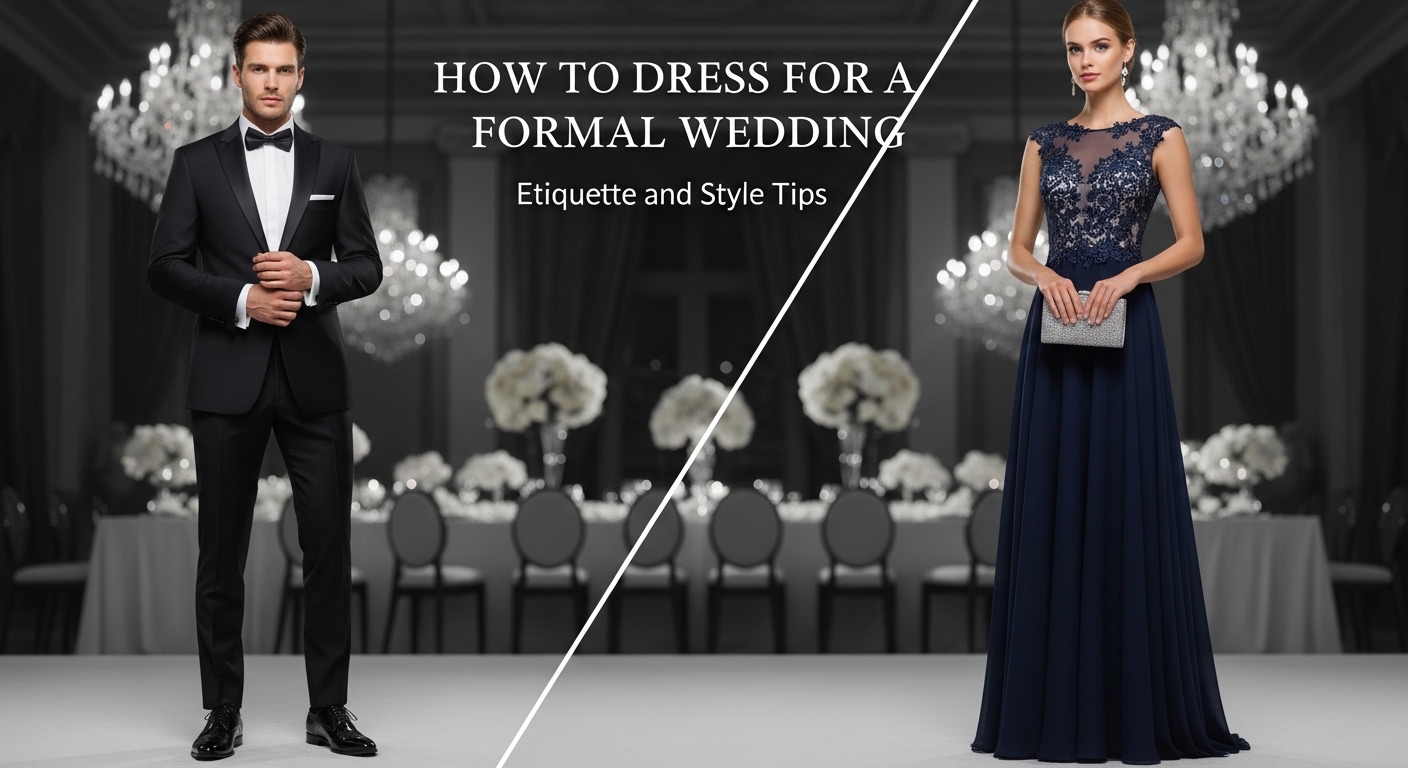
Black-Tie Weddings: This is as formal as it gets. Men are expected to wear a tuxedo, and women should reach for a floor-length gown or a genuinely sophisticated cocktail dress. Fabrics like velvet, silk, and satin feel right at home here. Anything too casual, too short, or too revealing is going to feel out of place.
Black-Tie Optional: Still a formal event, but with a little more breathing room. Men can wear a tuxedo or a sharp dark suit, and women have more flexibility – a sleek midi dress, a rich-colored gown, or something with a subtle pattern can all work beautifully.
Cocktail Attire: Less rigid, but still polished. Men do well with a dark suit and tie. Women can go with a knee-length dress or a chic midi. The vibe is elegant but approachable, and there’s room to show a bit more personality here.
The Importance of Fabric and Color
The fabric you choose quietly signals how seriously you took the dress code. For formal occasions, materials like satin, silk, chiffon, velvet, and taffeta carry an elegance that cotton or linen simply can’t match. They also tend to photograph beautifully, which doesn’t hurt.
Color is where people sometimes trip up. Black is a perfectly legitimate choice for evening weddings, and jewel tones – deep emerald, royal blue, burgundy – tend to work well across the board. For daytime events, softer shades like navy, champagne, or muted gold are lovely options.
The big rule everyone knows: don’t wear white. It extends a little further than that, though. Anything that could be confused with the bridal look – ivory, cream, very light blush – is worth skipping. It’s not about being overly cautious; it’s just one of those courtesies that genuinely matters to couples on their wedding day.
The Right Accessories to Complement Your Look
Accessories can make or break a formal outfit, and the key is intention. You’re not trying to compete with anyone – you’re trying to look complete.
For women, a small clutch or a streamlined handbag in a neutral or complementary color keeps things polished without being distracting. Jewelry should feel deliberate rather than piled on. Simple diamond studs, a delicate chain, or a single statement piece – pick a direction and commit to it.
Shoes matter more than people give them credit for at weddings. Elegant heels, closed-toe pumps, or strappy sandals all work well in formal settings, but please, wear something you can actually walk and dance in. Sore feet halfway through a reception make for a long night. Men should stick to well-polished leather shoes – oxfords or loafers are solid choices that hold up visually alongside a suit or tuxedo.
Hair and Makeup Tips for Formal Weddings
Your hair and makeup should feel like a natural extension of your outfit, not an afterthought. Classic updos – chignons, French twists, structured curls – tend to photograph well and hold up through an entire evening of eating, dancing, and hugging people. A sleek ponytail can read quite sophisticated depending on how it’s done. What you want to avoid is anything too undone or casual-looking, which can undercut an otherwise great outfit.
For makeup, daytime weddings generally call for something lighter and more natural. Evening events give you more latitude to play with a smoky eye or a bold lip. The main thing is keeping it cohesive – your face and your outfit should feel like they belong together.
Avoiding Common Mistakes
A few pitfalls come up again and again. Wearing something too casual for the venue is the most common one. Sundresses, flip-flops, anything sheer or too revealing – these choices tend to stand out for the wrong reasons at a formal event.
Going too far in the other direction can also backfire. Neon colors, extremely bold patterns, or anything that screams “look at me” pulls attention away from the people whose day it actually is.
Fit is worth mentioning, too. A well-fitted outfit in modest fabric will always outshine an expensive dress that doesn’t sit right. Give yourself enough time before the wedding to get alterations if you need them – it’s worth it.
Final Thoughts
Getting dressed for a formal wedding really does come down to a few simple principles: understand what the dress code is actually asking of you, choose fabrics and colors that suit the occasion, and put together a look that feels complete and intentional. Beyond that, wear something that makes you feel confident.
When you put real thought into your wedding guest dresses, the payoff is real – you spend the day actually enjoying yourself rather than tugging at your hem or wishing you’d made a different call. That’s the whole point.