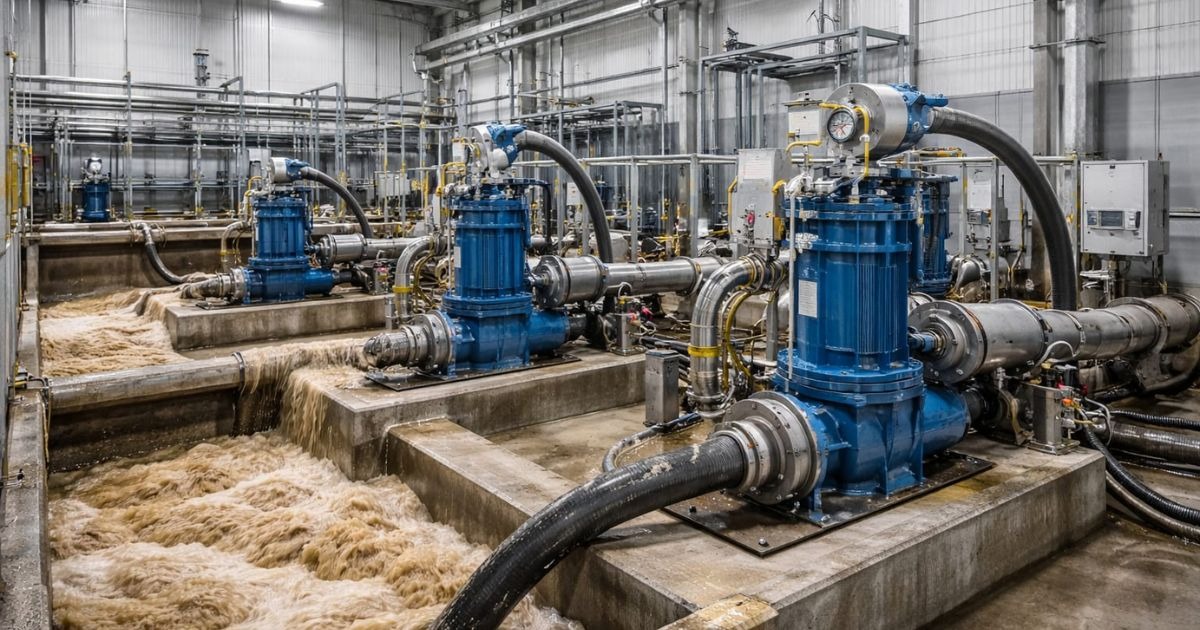
Sludge pumps are used for handling viscous and abrasive fluids in industrial, municipal, or wastewater environments. These pumps are designed to transport heavy, thick, and even corrosive sludge to ensure the treatment process runs smoothly and efficiently. High-quality sludge pumps are essential for businesses to ensure productivity, prevent blockages, and extend equipment lifespan.
These pumps are quite unlike ordinary water pumps in that they must handle high solids and abrasive materials and withstand chemical corrosion. When choosing the correct sludge pump, it is necessary to consider the sludge’s characteristics, installation requirements, and operating conditions to ensure optimal performance and service life.
What Are Sludge Pumps?
Sludge pumps are designed to convey thick, viscous liquids containing solid matter. Sludge is thick and requires powerful pumping solutions, whereas slurry is more water-based and easier to pump. Sludge pumps are also common in wastewater treatment facilities, industries, and city sewer systems.
Sludge vs Slurry Pumps
Although they seem to be synonymous, sludge and slurry pumps are somewhat different in their purpose:
- Sludge Pumps: Transport thick, soft, and usually abrasive sludge through sewer lines or processing systems. The heavier sludge needs high horsepower.
- Slurry Pumps: Are used in thinner mixtures with suspended solids that are water-based. Usually applied in mining, agriculture, and industry.
The difference will help you choose the right pump for your intended operational requirements.
How Sludge Pumps Differ from Water Pumps
Sludge cannot be handled with water pumps due to variations in viscosity, particle content, and potential chemical corrosion. Sludge pumps are characterised by high hydraulic capacity, durable materials, and abrasion resistance. This guarantees stability and a good working environment in harsh environments.
Types of Sludge Pump Installations
There are three possible ways to install the sludge pumps:
- Wet Installation: Complete pump immersion during operations such as cement plants, underwater work, and dyeing plants.
- Semi-Dry Installation: The bearings and wet end are flooded, while the drive remains dry; commonly used in dredging.
- Dry Installation: The drive and bearings do not come into contact with the liquid; only the wet half of the pump contacts the sludge.
Selecting the right type of installation is important for achieving the equipment’s efficiency, service, and durability.
Applications of Sludge Pumps
Sludge pumps are multi-purpose and find application in different industries:
- Wastewater Treatment: This is the transfer of sludge during treatment to disposal or processing facilities.
- Sewage Management: Pumping of effluents of municipal and industrial sewage.
- Industrial Processes: The management of the by-products of chemical, food, and mining industries.
- Flood and Environmental Management: The elimination of thick, abrasive mud and slurry in the rivers, docks, and construction sites.
Submersible Sludge Pumps
Submersible sludge pumps are primarily used when space is limited or in deep sewage pits. They run with full immersion, which means they can be pumped continuously without fear of overheating or cavitation. Other quality brands, such as Flygt, are chosen due to their reliability and efficiency.
Key Features to Consider
In choosing a sludge pump, consider:
- Horsepower: This varies with sludge density and flow requirements.
- Material Construction: Corrosion and abrasion resistance increase lifespan.
- Impeller Type: Semi-open or open impellers decrease clogging and enhance solids handling.
- Flow Rate & Pressure: Compare pump requirements with operating conditions to maximise the performance.
Maintenance and Safety
There should be regular maintenance to ensure the sludge pumps operate efficiently and safely. Key practices include:
- Wear-and-tear check of the impellers and bearings.
- Ensuring seal integrity to prevent fissures and corrosion.
- Properly lubricating and cooling semi-dry or dry installations.
- Adhering to the electrical/mechanical safety guidelines by the manufacturers.
Proper maintenance helps minimise downtime, lengthens the lifespan of equipment, and makes some equipment in line with health and safety regulations.
Benefits of Using Sludge Pumps
- Efficiency: Sludges are moved rapidly and continuously to alleviate congestion.
- Durability: Good-quality materials do not wear off due to abrasive and corrosive fluids.
- Multi-purpose: Can be used in the industrial, municipal, and environmental sectors.
- Cost Saving: Saves time and maintenance costs compared to poor-quality pumps.
By investing in the appropriate sludge pump, operators will be able to achieve long-term operational efficiency and reduce total costs.
Why Choose Pump Supplies
Pump Supplies is a supplier of sludge and slurry pumps throughout the UK, offering hire, sale, and service. They have a specialisation in submersible, dry, and semi-dry pumps, with strategically positioned depots, and offer expert advice and custom solutions to industrial and municipal customers. They offer installation, maintenance, and spare parts to ensure your pumping operations continue.
For more information on high-quality sludge pumps, visit Pump Supplies.