The vehicle licensing penalties involving Byron Thomas Williams relate to a serious regulatory case in the United Kingdom that resulted in his operator licence being revoked and a personal ban from holding such a licence for one year.
Who Is Byron Thomas Williams
Byron Thomas Williams was the sole director of a UK goods vehicle operator called BTW Transport Ltd, based in the North East of England. His business held a standard national goods vehicle operator’s licence authorising a fleet of vehicles.
The case became significant because of repeated breaches of licensing laws, safety requirements, and vehicle maintenance standards. A public inquiry into his company’s practices exposed these failures and led to formal regulatory action.
What Triggered the Vehicle Licensing Penalties
Regulators launched a formal public inquiry after receiving multiple inspection reports from the Driver and Vehicle Standards Agency (DVSA). These reports identified serious compliance and safety issues, including:
- Vehicles were used on public roads even after the operator’s licence had been revoked.
- Some vehicles were used without valid excise duty.
- Inaccurate inspection and maintenance records were found.
- Brake efficiency testing was inconsistent or missing.
- Drivers submitted defect reports that did not reflect actual serious faults.
- Tyre defects led to multiple “S”-marked prohibitions, indicating serious road safety risks.
Because of these failings, the Traffic Commissioner concluded that the operator lacked proper compliance systems and posed a risk to road safety.
Legal Basis for Licensing Penalties
In the UK, goods vehicle operators must hold a valid operator’s licence to use vehicles for commercial transport. Licences are granted under the Goods Vehicles (Licensing of Operators) Act 1995, which allows the Traffic Commissioner to revoke licences and impose sanctions when operators fail to comply with legal and safety obligations.
The Traffic Commissioner’s role is to ensure that operators meet statutory standards for vehicle maintenance, roadworthiness, and regulatory compliance. When those standards are breached repeatedly, the commissioner can take regulatory decisions, including revocation and disqualification.
Specific Penalties Imposed
In the Byron Thomas Williams case, the penalties were significant. They included the following:
Penalty Types and Details
| Penalty | Description |
|---|---|
| Operator Licence Revoked | BTW Transport Ltd’s goods vehicle operator licence was revoked with effect from 22 October 2025 at 23:45. |
| Company Disqualification | The company cannot hold or obtain any operator’s licence for 12 months, until 22 October 2026. |
| Director Disqualification | Byron Thomas Williams is barred from holding or being involved in any operator’s licence for the same 12‑month period. |
This level of penalty sits at the severe end of the licensing penalty scale and reflects repeated regulatory breaches and road safety concerns.
Why These Penalties Matter
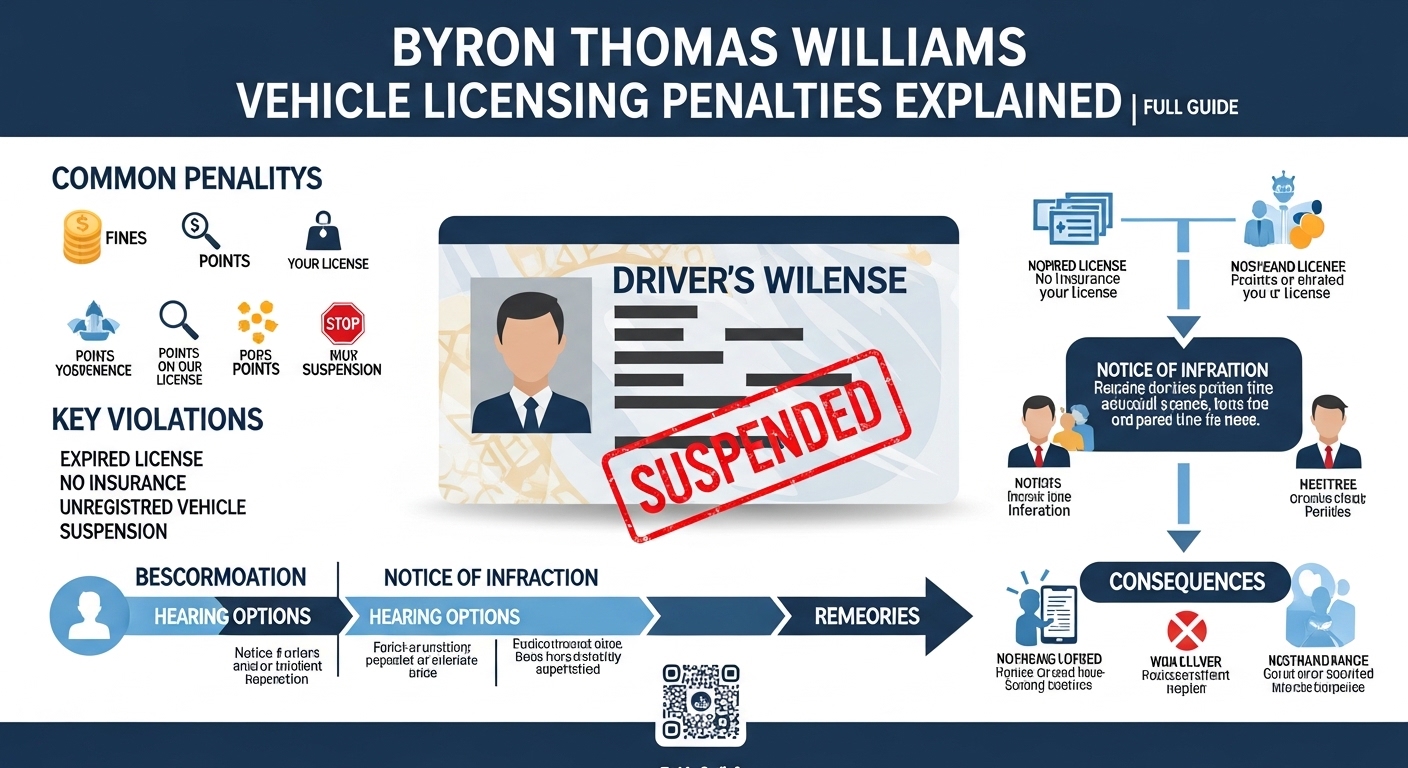
The sanctions imposed on Byron Thomas Williams and his company show how seriously UK regulators treat vehicle licensing compliance. Key aspects include:
- Safety First: Operating vehicles without proper maintenance records or valid excise duty can endanger all road users.
- Regulatory Integrity: Licence conditions are legal requirements. Ignoring them undermines the system and gives unfair commercial advantages.
- Personal Accountability: Directors and transport managers have personal responsibilities for compliance. Regulatory decisions can affect them individually.
These outcomes serve as a model for how licensing penalties can be applied when operators fail to meet their statutory duties.
How Revocation and Disqualification Work
When a public inquiry finds serious breaches of operator obligations, the Traffic Commissioner may revoke a licence and disqualify individuals under specific statutory provisions in the Goods Vehicles (Licensing of Operators) Act 1995.
Revocation means the operator can no longer run commercial vehicles under that licence. Disqualification prevents the same business or individual from applying for or holding a licence for a set period. These penalties aim to protect road safety and the integrity of the licensing system.
Common Vehicle Licensing Penalty Types (General Overview)
The table below explains various regulatory penalties that can apply in licensing contexts. This is not specific to the Williams case but helps contextualise the types of actions regulators may take.
| Penalty Level | Example Breach | Common Regulatory Action |
|---|---|---|
| Minor | Late submission of records | Warning or small fine |
| Moderate | Vehicles not fixed after defects | Suspension until issues are fixed |
| Serious | Safety defects persist | Larger fines, impoundment, prohibition notices |
| Severe | Use of vehicles without licence | Licence revocation, disqualification |
This type of breakdown shows how different levels of compliance failure attract escalating penalties.
What Operators Should Know
Vehicle operators and managers should understand the following to avoid penalties similar to this case:
- Keep accurate and auditable maintenance and inspection records.
- Ensure drivers report genuine faults.
- Do not operate vehicles without valid licences and excise duty.
- Respond promptly and honestly to regulatory inquiries.
Failing in these areas can result in penalties that disrupt business operations and professional reputations.
Just like professionals in other fields, such as learning how Dofota Kucharski became a pro golfer, transport managers must follow strict rules and maintain records to build a strong career.
Impact of Non‑Compliance
The regulatory action taken against BTW Transport Ltd highlights the broader impact of non‑compliance:
- Business Disruption: Licence revocation stops commercial operations.
- Professional Setbacks: Directors and managers may face bans from their field.
- Safety Risks: Vehicles without proper licensing or maintenance can pose hazards.
Operators must take compliance seriously to avoid these consequences.
Non‑compliance can upset clients and the public, similar to situations seen in Marmaris nightlife curfew tourist anger, where rules affect both operators and the community.
Frequently Asked Questions
What does licence revocation mean?
Licence revocation means the operator cannot legally run vehicles for commercial purposes under the revoked licence.
How long is disqualification?
In this case, both company and director are banned for 12 months until 22 October 2026.
Can these penalties be appealed?
Regulatory decisions can be challenged through formal appeal processes, but success depends on strong evidence.