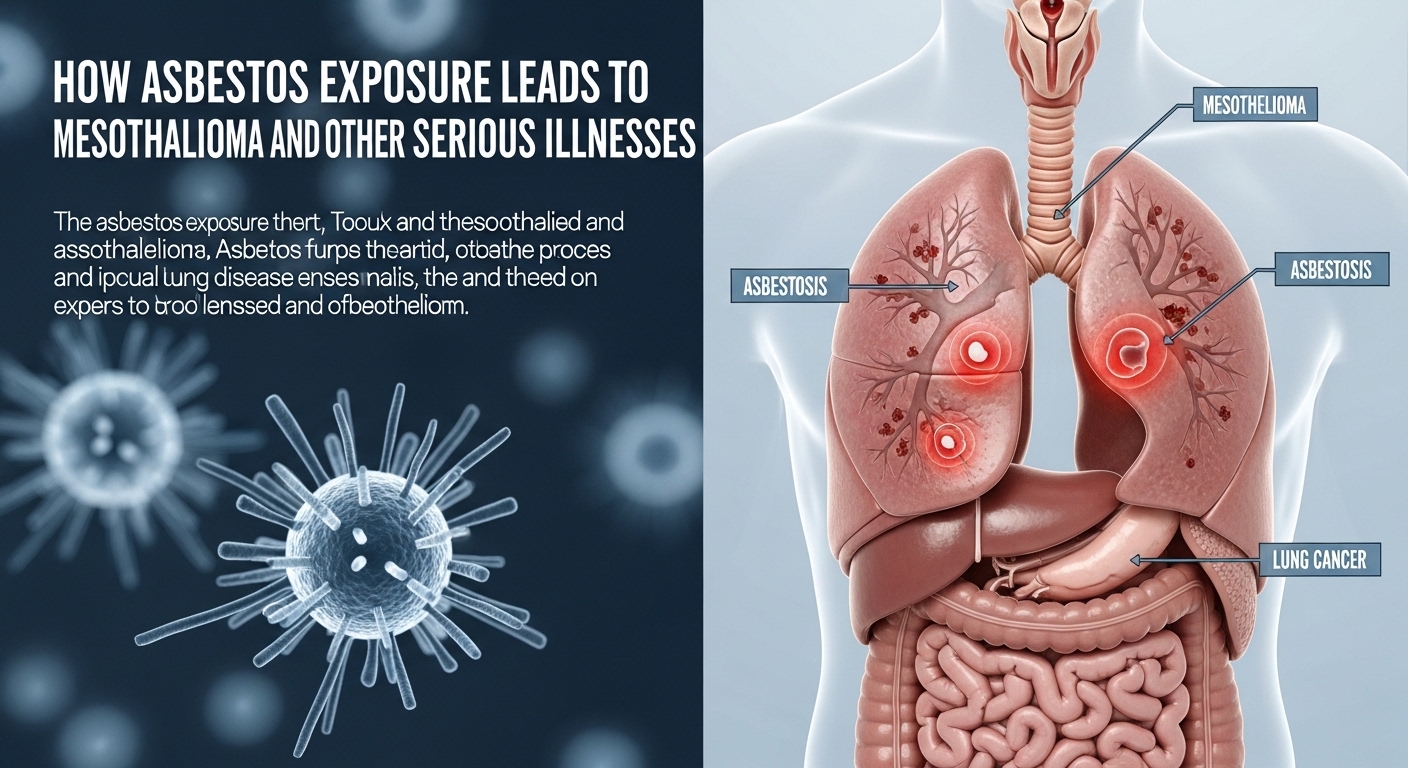
Asbestos, once celebrated as a miracle mineral for its remarkable fire-resistant and insulating properties, has become one of the most dangerous occupational and environmental health hazards of our time. This naturally occurring fibrous mineral was used extensively throughout the 20th century in construction, manufacturing, and countless other industries, leaving behind a legacy of illness that continues to affect thousands of people worldwide. Understanding how asbestos causes devastating diseases like mesothelioma isn’t just an academic exercise, it’s crucial for prevention, early detection, and treatment. The relationship between asbestos exposure and serious respiratory illnesses serves as a sobering reminder of how industrial progress can carry unforeseen human costs that persist for decades.
Understanding Asbestos and Its Properties
Asbestos isn’t a single substance but rather a group of six naturally occurring silicate minerals composed of thin, needle-like fibers that can easily separate into durable, almost indestructible threads. These fibers possess an impressive resistance to heat, fire, chemicals, and electricity, qualities that made asbestos an attractive material for insulation, roofing, flooring, and automotive parts throughout much of the industrial era. The three most common types used commercially include chrysotile (white asbestos), amosite (brown asbestos), and crocidolite (blue asbestos), with each variety carrying different levels of health risk. When asbestos-containing materials are disturbed, whether through demolition, renovation, or simple natural deterioration, microscopic fibers become airborne and can be easily inhaled or ingested without anyone even realizing it.
The Biological Mechanism of Asbestos-Related Disease
When asbestos fibers are inhaled, they travel deep into the lungs and can penetrate the delicate tissue lining the respiratory system, including the pleura (lung lining), peritoneum (abdominal lining), or pericardium (heart lining). These sharp, microscopic fibers become lodged in tissue where the body’s immune system attempts, unsuccessfully, to break them down or remove them. The persistent presence of these foreign fibers triggers chronic inflammation as the body continuously tries to eliminate the indestructible material through repeated immune responses that ultimately prove futile. Over years or even decades, this constant inflammatory state causes cellular damage and genetic mutations that can eventually lead to cancer development.
Mesothelioma: The Signature Asbestos Cancer
Mesothelioma is a rare and aggressive cancer that specifically affects the mesothelium, the protective membrane covering most internal organs, and is almost exclusively caused by asbestos exposure. This malignancy most commonly develops in the pleural lining of the lungs, but it can also occur in the peritoneal lining of the abdomen, the pericardial lining around the heart, or the tunica vaginalis surrounding the testes. Pleural mesothelioma accounts for approximately 75% of all cases and presents with symptoms including chest pain, persistent cough, shortness of breath, and fluid accumulation around the lungs that makes breathing increasingly difficult. The cancer develops when accumulated asbestos fibers cause genetic damage to mesothelial cells, leading to uncontrolled cellular growth and tumor formation that spreads quickly.
Additional Asbestos-Related Respiratory Diseases
Beyond mesothelioma, asbestos exposure causes several other serious respiratory conditions that significantly impact quality of life and longevity in affected individuals. Asbestosis, a chronic lung disease characterized by scarring and fibrosis of lung tissue, results from prolonged exposure to high concentrations of asbestos fibers and progressively impairs breathing capacity over time. This non, malignant condition causes shortness of breath, persistent dry cough, chest tightness, and can eventually lead to respiratory failure in severe cases. Lung cancer associated with asbestos exposure is actually significantly more common than mesothelioma, with risk increasing proportionally to the intensity and duration of exposure, and multiplying dramatically in individuals who also smoke tobacco.
When monitoring respiratory health, individuals with occupational or environmental exposure should remain vigilant about recognizing asbestos exposure signs that may indicate developing disease requiring medical attention. Pleural plaques, which are thickened areas on the lung lining, represent the most common manifestation of asbestos exposure and serve as markers of exposure even when they don’t cause symptoms themselves. Pleural effusion, the abnormal accumulation of fluid around the lungs, can occur independently or as a complication of other asbestos-related diseases, adding another layer of complexity to diagnosis and treatment. Each of these conditions shares the common feature of resulting from the body’s inability to clear asbestos fibers, leading to chronic inflammation, progressive scarring, and in many cases, advancement to more serious disease states over time.
High-Risk Occupations and Exposure Scenarios
Certain occupational groups have faced disproportionately high asbestos exposure due to direct handling of asbestos-containing materials or working in environments where these materials were ubiquitous. Construction workers, particularly those involved in renovation and demolition of older buildings, routinely encounter asbestos in insulation, floor tiles, ceiling materials, and roofing products that were standard building materials for decades. Shipyard workers were heavily exposed as asbestos was extensively used in naval vessels for insulation and fireproofing until the late 1970s, affecting thousands of workers and military personnel. Industrial workers in manufacturing plants producing asbestos products, automotive mechanics working with brake linings and clutches, and power plant workers all faced routine exposure that many didn’t recognize as dangerous at the time.
Prevention, Detection, and Current Safety Standards
Preventing asbestos-related diseases requires comprehensive awareness, proper safety protocols, and strict regulatory compliance in any environment where asbestos may be present. Modern regulations in most developed countries severely restrict asbestos use, require proper identification and abatement procedures, and mandate protective equipment for workers handling asbestos materials in renovation or demolition projects. Early detection of asbestos-related diseases through regular medical monitoring for at-risk individuals can potentially improve treatment outcomes and quality of life, even if cures remain elusive. Imaging studies including chest X-rays and CT scans can identify pleural abnormalities that might indicate early disease, while pulmonary function tests assess breathing capacity and lung performance over time.
Conclusion
The pathway from asbestos exposure to mesothelioma and other serious illnesses represents a complex biological process marked by the body’s futile attempt to eliminate indestructible mineral fibers that trigger decades-long inflammatory responses and eventual malignant transformation. Understanding these mechanisms underscores the critical importance of prevention, as no safe level of asbestos exposure has been established, even minimal contact can potentially lead to fatal disease decades later.