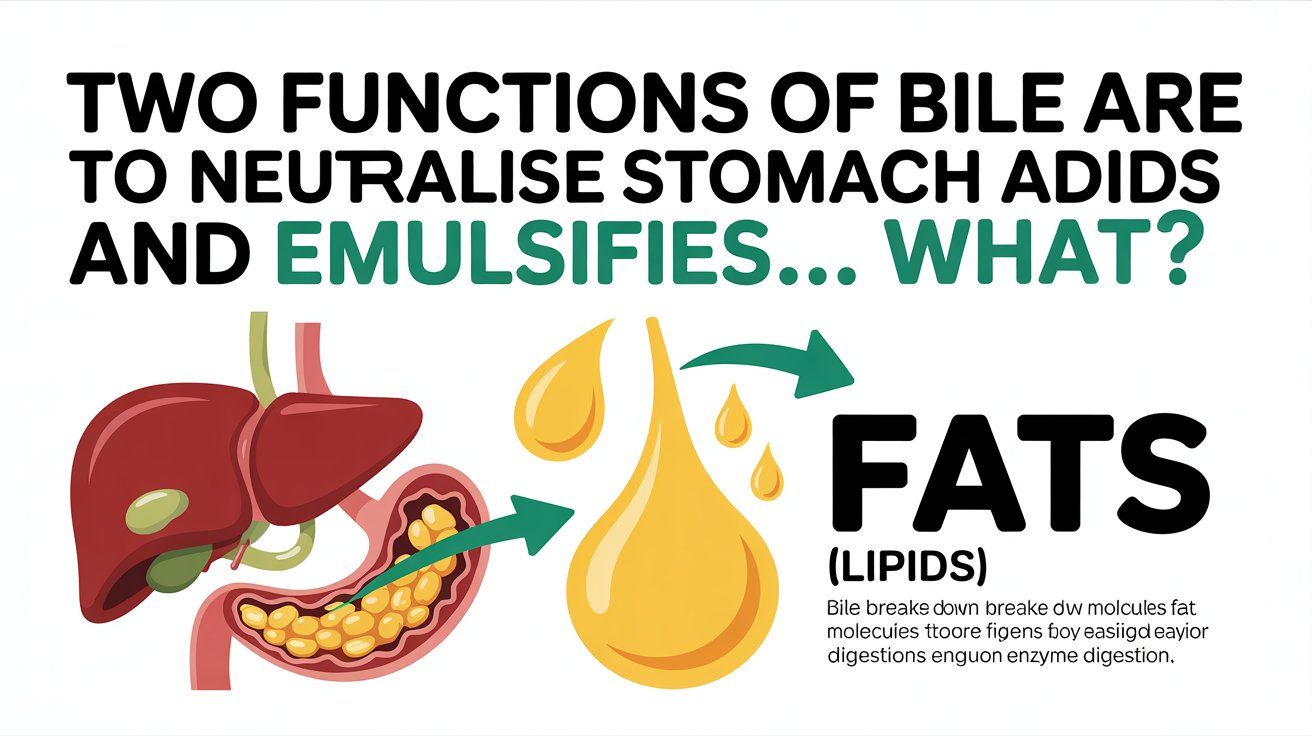
Two Functions Of Bile Are To Neutralise Stomach Acids And Emulsifies… What? — bile emulsifies fats (lipids). Bile helps make big fat globs into tiny droplets so enzymes can actually break them down.
What that short answer really means
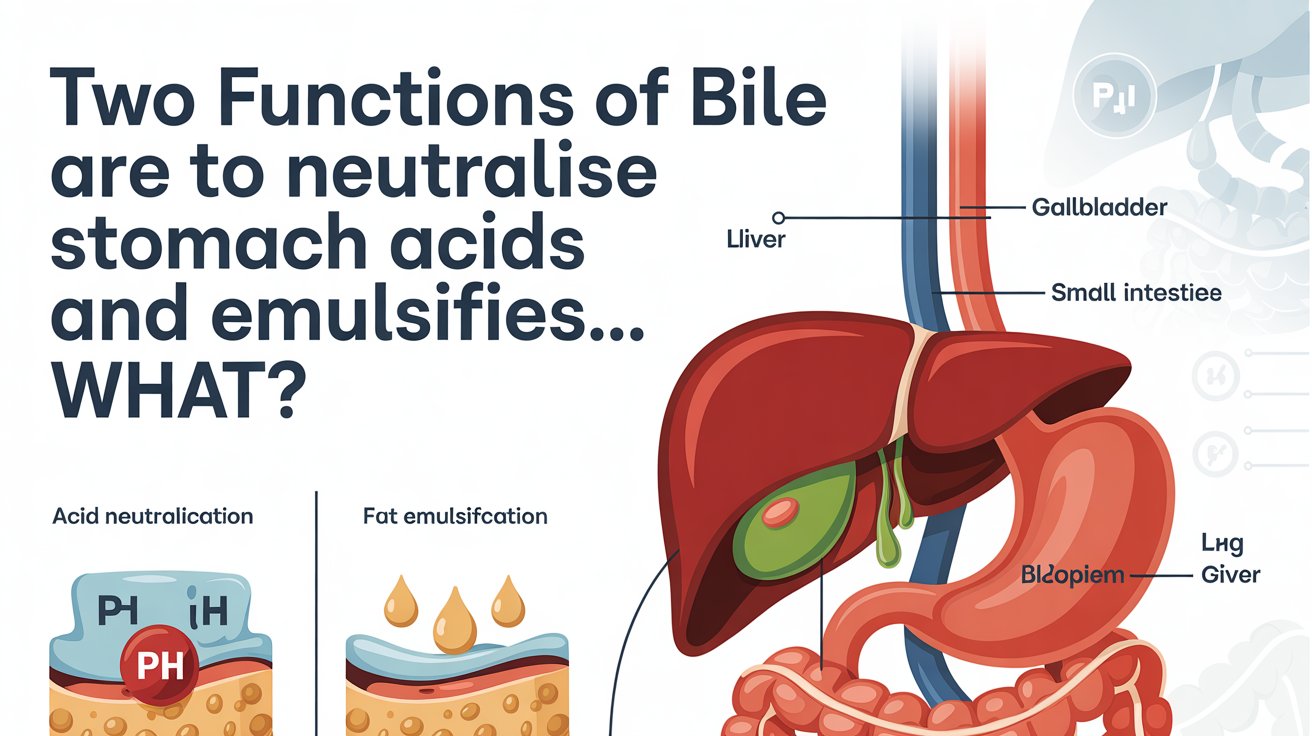
Bile arrives in the duodenum when acidic chyme leaves the stomach. One job is to raise the pH a bit so intestinal enzymes work best and the lining stays safe.
The other job is mechanical chemistry. Bile contains bile salts that latch onto fat and split large globules into many small droplets. That gives digestive lipase way more surface to act on.
So, neutralizing acid and emulsifying fats are two sides of the same digestive coin. Both prepare food so the small intestine can finish the job.
The digestive system also relies on basic chemical reactions, similar to how compounds like Hcooch CH2 H2O are studied to understand how substances behave in watery environments inside the body.
Why neutralizing stomach acid matters
Stomach juice is very acidic. When that acid hits the duodenum it would inactivate pancreatic enzymes and irritate the lining. Bile helps buffer the incoming chyme so enzymes like pancreatic lipase and amylase can work.
Think of it like adjusting the kitchen temperature before cooking: wrong heat and the recipe fails. The duodenum needs a milder, alkaline-friendly environment. Bile is part of that adjustment team.
Without this neutralizing step digestion becomes inefficient and the intestinal surface can be damaged over time. That is why coordinated release of bile and pancreatic juice matters.
How bile actually emulsifies fats
Bile salts are amphipathic molecules. That means they have a water-friendly side and a fat-friendly side. They wedge into the fat surface and break large droplets into much smaller ones.
Once fat is in tiny droplets, pancreatic lipase can reach the triglycerides and chop them into absorbable bits. The resulting molecules join into mixed micelles that ferry them to the intestinal lining.
So emulsification is not chemical breaking of bonds, it is making fat accessible for the enzymes that do the real chemical work. That distinction clears up a lot of confusion.
What’s in bile and why those parts matter
Bile is mostly water plus bile salts, phospholipids, cholesterol, and conjugated bilirubin. The salts are the active emulsifiers. The pigments and cholesterol are things the liver excretes through bile.
Because bile also carries bilirubin and extra cholesterol, it is an elimination route. Problems with flow cause jaundice or gallstones when these components build up. That links digestion and liver health directly.
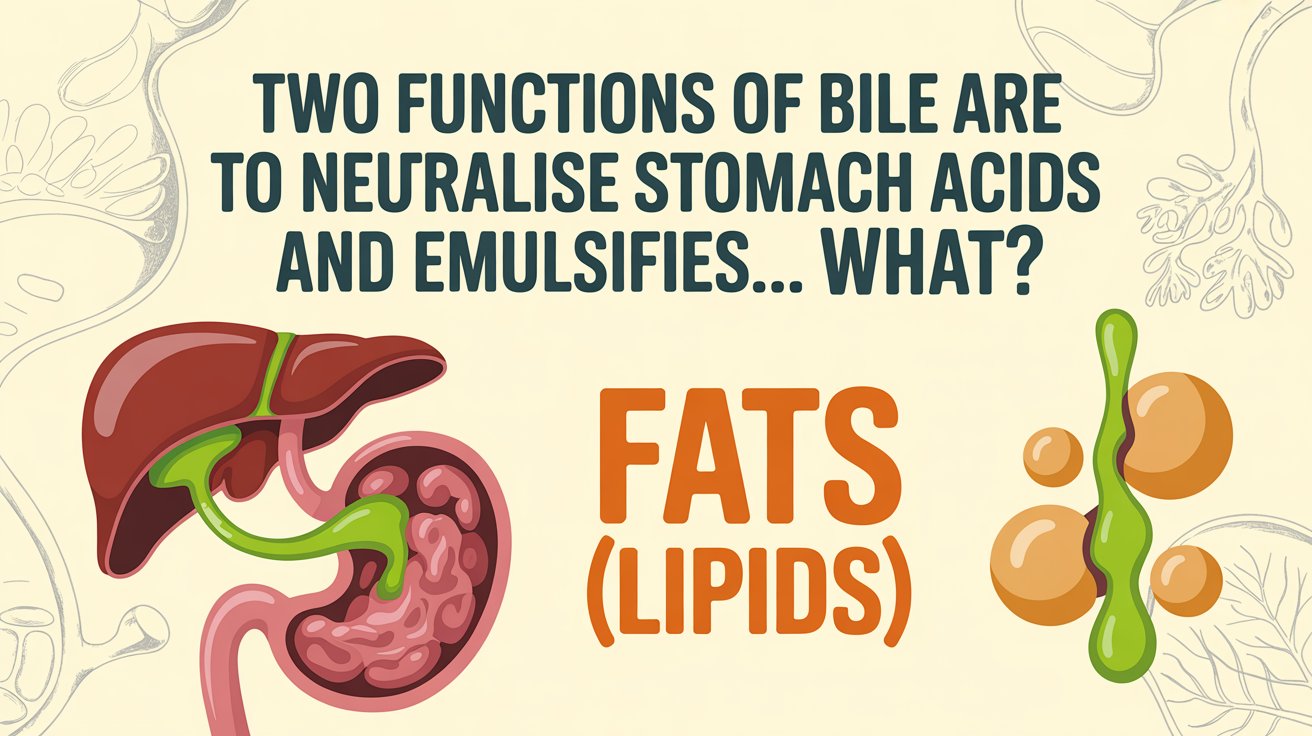
The gallbladder stores and concentrates bile between meals and releases it when fats arrive. That timing matters for efficient digestion after a fatty meal.
Real-life examples that make it obvious
Eat a heavy, greasy meal and you need that bile action. If bile flow is blocked you get pale stools and fat malabsorption. That’s not subtle.
People with certain liver or gallbladder conditions struggle to absorb vitamins A, D, E, and K because those need bile for proper uptake. That shows how emulsification affects nutrition, not just digestion.
Doctors sometimes give bile acid supplements or adjust diet to manage fat absorption problems. That’s applied physiology in daily care.
In some digestive conditions, doctors may recommend medications or supplements, such as Abithelp Tablet, to support digestion when bile flow or fat absorption becomes an issue.
Quick summary you can remember
Two Functions Of Bile Are To Neutralise Stomach Acids And Emulsifies… What? — fats (lipids). Neutralize incoming acid. Emulsify fats so enzymes can digest them.
Bile also helps absorb fat-soluble vitamins and removes waste like bilirubin and excess cholesterol. It is both a helper and a waste courier.
If you want one line to keep: bile prepares and cleans up. It makes fats digestible and helps keep the intestine safe from acid.