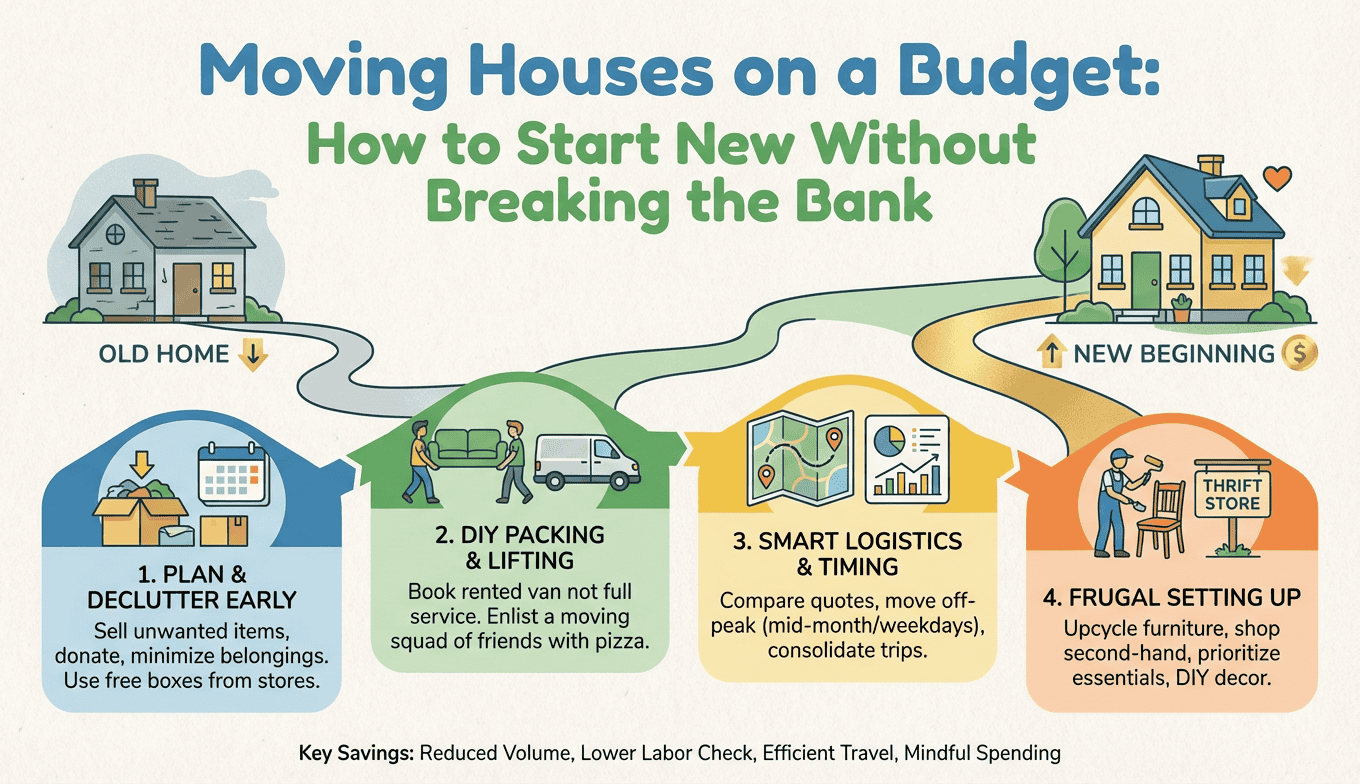
Moving to a new home ranks among life’s most significant transitions, yet it doesn’t have to empty your wallet. With thoughtful planning and smart decisions, you can pull off a successful relocation without sacrificing your financial stability. The secret? Understanding exactly where to trim costs while keeping your move safe and efficient. Whether you’re headed across town or crossing state lines, budget-conscious strategies can save you hundreds, sometimes thousands, of dollars. This guide explores practical approaches to minimize moving expenses while ensuring your transition to a new space goes smoothly.
Planning Your Move Well in Advance
Starting early makes all the difference when you’re trying to stick to a moving budget. Kicking off your moving process at least two months ahead gives you breathing room to compare prices, hunt down the best deals, and sidestep those expensive last-minute charges that can balloon your costs. Put together a comprehensive moving checklist that maps out every task from beginning to end, complete with deadlines for each step. Take time to research how moving costs fluctuate throughout the month and year, prices typically dip during mid-month periods and slower seasons like fall and winter.
Decluttering to Reduce Moving Costs
Reducing what you’re taking with you stands out as one of the smartest money-saving moves you can make. Work through each room methodically, sorting items into clear categories: keep, donate, sell, or toss. Here’s the reality, fewer belongings mean fewer boxes, a smaller moving vehicle, and less time spent on the entire process. Consider hosting a garage sale or posting items on online marketplaces to generate some extra cash that can offset what you’re spending on the move itself.
Finding Free or Low-Cost Packing Materials
Packing supplies can eat up a surprising chunk of your budget, but there’s good news, plenty of ways exist to snag quality materials without spending much at all. Begin collecting boxes several weeks early from local grocery stores, liquor stores, and bookstores, which receive regular shipments and typically give away sturdy boxes at no charge. Get creative by using towels, blankets, clothing, and linens as protective wrapping for fragile items instead of buying bubble wrap or packing paper. Community groups on social media platforms offer another goldmine, people who’ve recently moved often happily give away their used boxes.
Choosing the Right Moving Method for Your Budget
Picking the right moving approach represents one of the most impactful budget decisions you’ll face during relocation. Take time to evaluate whether full-service, partial service, rental truck, or complete DIY best fits your budget and physical capabilities. For local moves, renting a truck and enlisting friends or family can dramatically slash costs compared to professional services. That said, don’t forget to account for extras like fuel, insurance, equipment rental for dollies and furniture pads, plus the value of your time and energy. If you’re dealing with limited heavy lifting ability or facing a long-distance move, hybrid options exist where you handle the packing but bring in professionals for loading, transportation, and unloading. When weighing professional options, searching for “affordable residential movers near me” can provide quotes that help you stack up costs against DIY alternatives. Container moving services present a middle-ground solution, a company drops off a container you pack on your own schedule, then transports it to your destination. Gather multiple quotes from different providers, making absolutely sure you understand what services each quote covers and any potential add-on fees. Remember, the rock-bottom cheapest option isn’t always the most cost-effective once you factor in potential damage, injuries, or the sheer stress of managing everything solo.
Timing Your Move Strategically
When you move can make a dramatic difference in your overall costs, with strategic scheduling potentially saving several hundred dollars. Moving companies charge premium rates during peak season, May through September, especially on weekends and at month’s end when most leases expire. If your situation allows it, schedule your move during fall or winter months when demand drops and companies offer better rates. Aim for a mid-month moving date instead of the beginning or end when most people are relocating, as this flexibility frequently translates to meaningful discounts.
Maximizing Tax Deductions and Employer Benefits
Getting familiar with available tax benefits and employer reimbursements can meaningfully offset your moving expenses and strengthen your financial position. While tax laws shift from time to time, certain job-related moves may qualify for deductions or reimbursements that lower your effective moving costs. Have a conversation with your employer about relocation assistance packages, which might include direct payment of moving expenses, reimbursement programs, or lump-sum payments. Some companies provide temporary housing assistance, helping you dodge the expense of overlapping rent or mortgage payments during your transition period.
Conclusion
Moving on a budget takes thoughtful planning, strategic decisions, and creative problem-solving, but pulling off an affordable relocation is absolutely achievable with the right approach. By launching your preparations early, decluttering extensively, sourcing free packing materials, selecting the most cost-effective moving method, timing your move strategically, and exploring all available financial benefits, you can substantially reduce the financial burden of relocating. Keep in mind that the goal isn’t necessarily picking the absolute cheapest option for every single aspect of your move. Rather, it’s about making informed choices that strike a balance between cost savings and convenience, safety, and peace of mind. Armed with these strategies, you can step into your new beginning without financial stress weighing you down, freeing you up to focus on settling into your new home and becoming part of your new community.