Have you ever thought about why staying alert to your Wikipedia page is such a significant matter? The reason is that Wikipedia is among the most reliable and most visited sites on the Internet. This means that people usually resort to it as the first source to get information about you, your brand, or your business. Since the page is open for public editing, incorrect or unfavorable information can come up unexpectedly.
When you don’t monitor your page, these errors stay there on the internet and result in a affecting effect on your online reputation. Daily checkups allow you to quickly identify amendments, highlight mistakes, and protect your reputation. It’s a small step that brings about a huge impact.
Why It’s Important to Have Your Wikipedia Page Monitored?
The monitoring of your Wikipedia page is essential since it acts as a safeguard for your good name. Due to the open editing policy of Wikipedia, unsanctioned and untruthful information might get added without your knowledge. If there’s no page checking on your part, the inaccuracies can remain posted and be accepted as facts by people. By making it a point to do the monitoring of your page regularly, you’ll be in a position to fix mistakes quickly and ensure that nothing but the right information is there. This, in turn, will make the others trust your page and view the correct and truthful information about you or your brand.
You can even hire professional Wikipedia page creation services to make this job easier. They are experienced in this job and know exactly what it exactly requires to get your page monetized.
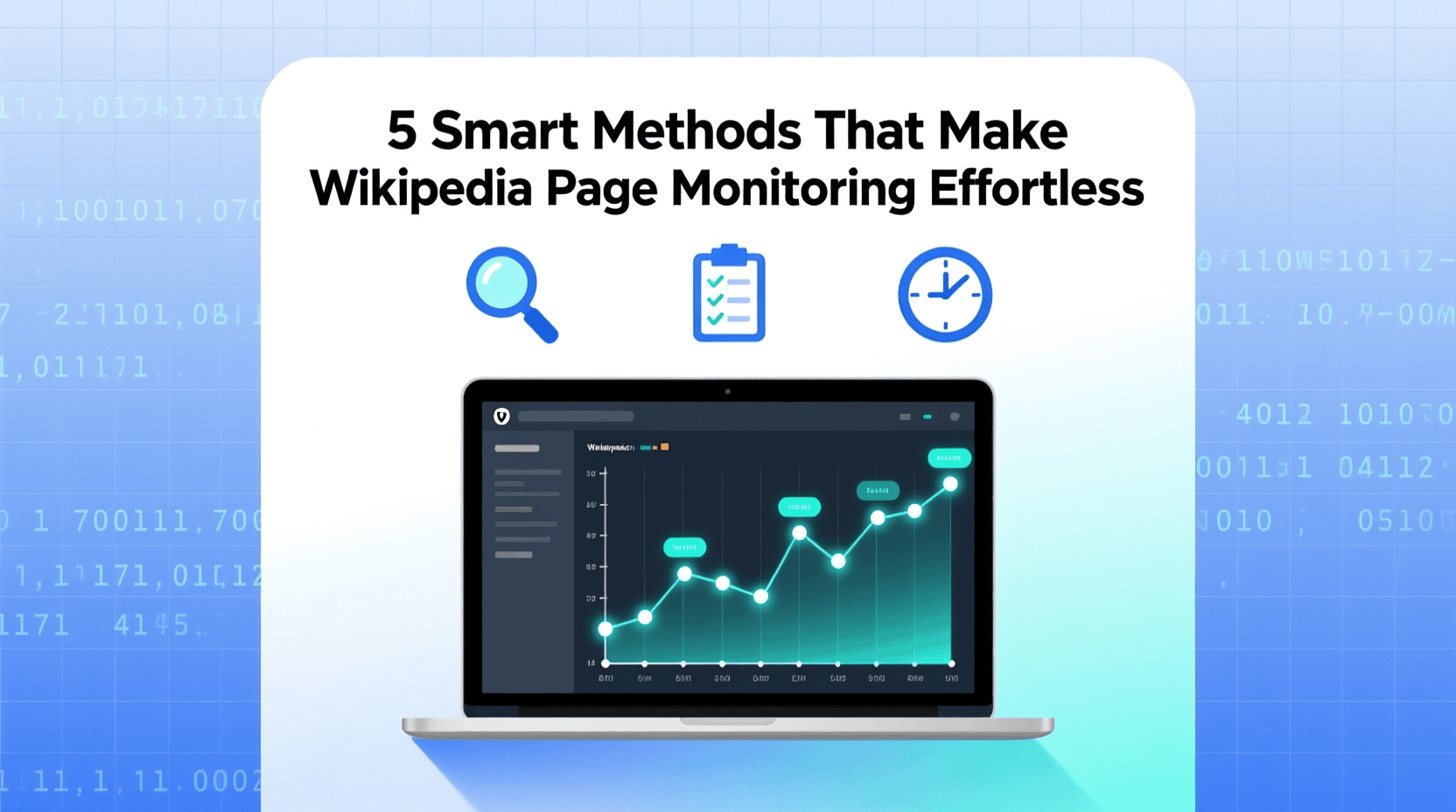
Smart Techniques That Make Page Monitoring Easier
Here are some useful methods that make the process of monitoring less stressful
Method 1: Setting Up Real-Time Alerts and Watches
The “watchlist” function of Wikipedia is a good way to be informed of any edits made to your page. It is easy, just click on the star icon at the top of the page to make it a part of your watchlist. Moreover, there are free outside tools that can send you email alerts. The alerts will let you recognize the changes at once, and thus you can fix the mistakes or reply to the edits in no time.
Method 2: Employing Third-Party Monitoring Tools
Numerous ways are available that monitor the changes at Wikipedia on your behalf. They provide you with a summary of new edits, parts that are deleted, added links, or even dubious updates. Such methods will enable you to identify issues such as misinformation or vandalism. Having to check them regularly, you would be in a position to notice what has been altered and make a decision on whether the update is right or requires adjustment. This is also time time-saving technique and helps to maintain the page neat.
Method 3: Creating Internal Page Ownership and Workflow
Appoint a person in the team or yourself to keep an eye on the Wikipedia page daily. This person is responsible for checking edits, scrutinizing new changes, and deciding what needs attention. It is good to have a basic strategy: what to check, when to respond, and when to report large issues. A transparent process makes surveillance easier and maintains your page’s accuracy and security.
Method 4: Audit and Analyze Page History Regularly
A complete record of all changes made to Wikipedia articles is available. The “History” button can be clicked to not only show the different editions of an article but also point out what has been altered through time. This practice facilitates the detection of inconsistencies such as the recurrence of incorrect modifications or leaning towards a specific alteration. A regular check-up will also enable you to maintain a good grasp of how your page is being utilized and secured. It is an excellent way to bring issues to light at an early stage and thus ensure the continued stability of your page.
Method 5: Engage With the Community & Use Talk Pages Smartly
A “Talk” tab is present on every Wikipedia page where the editors carry out a discussion regarding the proposed changes. You have an opportunity to use this section to place your queries to yourself or to rationalize the need to retain or to modify some information. Politeness can go a long way in gaining the favour of the editors. The most important part in maintaining a clean, sincere, and balanced Wikipedia page is through proper communication.
You can also use a Wikipedia page monitoring service to help you track changes and keep your page accurate without doing all the work yourself.
Wrapping it Up
Watching over your Wikipedia page is at the top of the list of the simplest ways to safeguard your digital character. By using basic instruments and clever techniques, you can see any modifications, correct errors, and maintain your data to be right in no time at all. It is worth noting that a neat and precise Wikipedia page gives the public more trust and a better understanding of you. Your constant activity and page checking denote that your online reputation is strong, safe, and honest.