
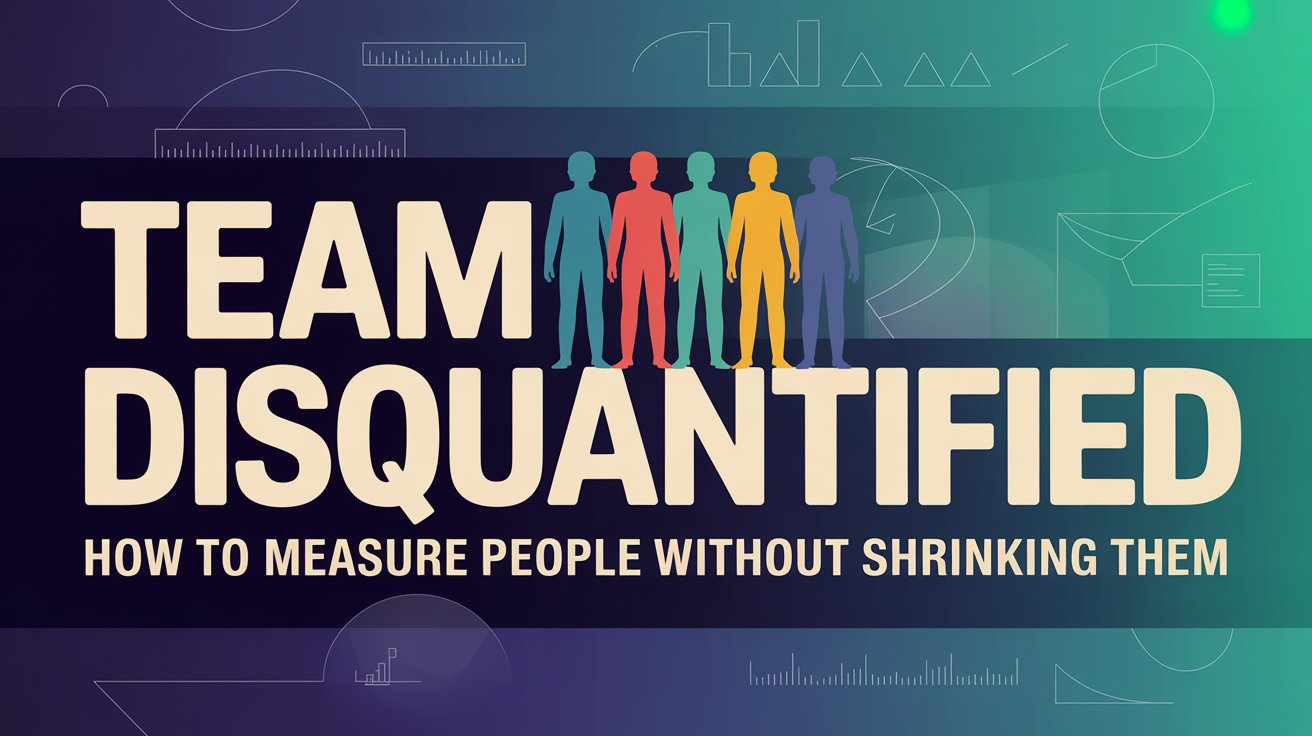
Team Disquantified means treating a team as more than numbers. It’s a deliberate move away from rigid KPIs and leaderboards toward human signals like trust, learning, and day-to-day collaboration.
What Team Disquantified actually looks like
A disquantified team still cares about outcomes but refuses to let narrow metrics define value. Leaders read stories, not just dashboards.
You’ll see short, frequent check-ins that capture how people feel about work and each other. Those check-ins become data points of a different sort.
Roles stay clear, but evaluation mixes examples, peer notes, and context alongside any numbers. That gives a fuller picture of performance.
Why this matters right now
Teams burn out when every day is a numbers game. Team Disquantified pushes back by making human sustainability part of success.
It helps keep creativity alive because people aren’t optimized into safe, repeatable outputs only. That matters in fast-changing fields.
Finally, it builds resilience. Teams that communicate stories behind the work adapt faster when things change.

How you can measure without shrinking people
Start with narrative metrics: short written reflections, one-line peer shout-outs, and short post-mortems. Those are data you can act on.
Use simple trend trackers for sentiment over time. Don’t treat the number as the whole story. Keep an anecdote attached to each dip or spike.
Balance the qualitative with a few clear quantitative goals tied to outcomes. The trick is context. Always ask: what story explains this number?
Practical benefits you’ll see quickly
You’ll notice better conversations in standups because people feel heard. That’s a direct return on investing in stories.
Recruitment improves when your team’s reputation is built on growth and care, not a ruthless scoreboard. Candidates talk about culture.
Teams make smarter long-term choices because short-term metric-chasing loses power. That raises capacity to innovate.
Common mistakes teams make when trying this
Treating qualitative signals as fluffy. If you collect them but ignore them, you haven’t changed anything. Act on what you learn.
Removing all numbers is another mistake. Numbers help, but they should sit beside context and stories. The balance matters.
Assuming everyone knows how to write useful narrative notes. Train people. Show examples. Keep formats short and practical.
A simple 30-day plan to get started
Week one: add a single sentiment check and one short peer highlight to every retro. Keep it two lines max.
Weeks two and three: attach a one-sentence context note to any metric that changes more than expected. Read the notes in a short weekly sync.
Week four: pick one small process change from those notes and run it for two weeks. Track both feelings and outcomes. Repeat.
Final takeaway
Team Disquantified is not anti-data. It’s anti-reduction. Treat metrics as clues, not judgments. When teams pair numbers with stories, they get both clarity and care.