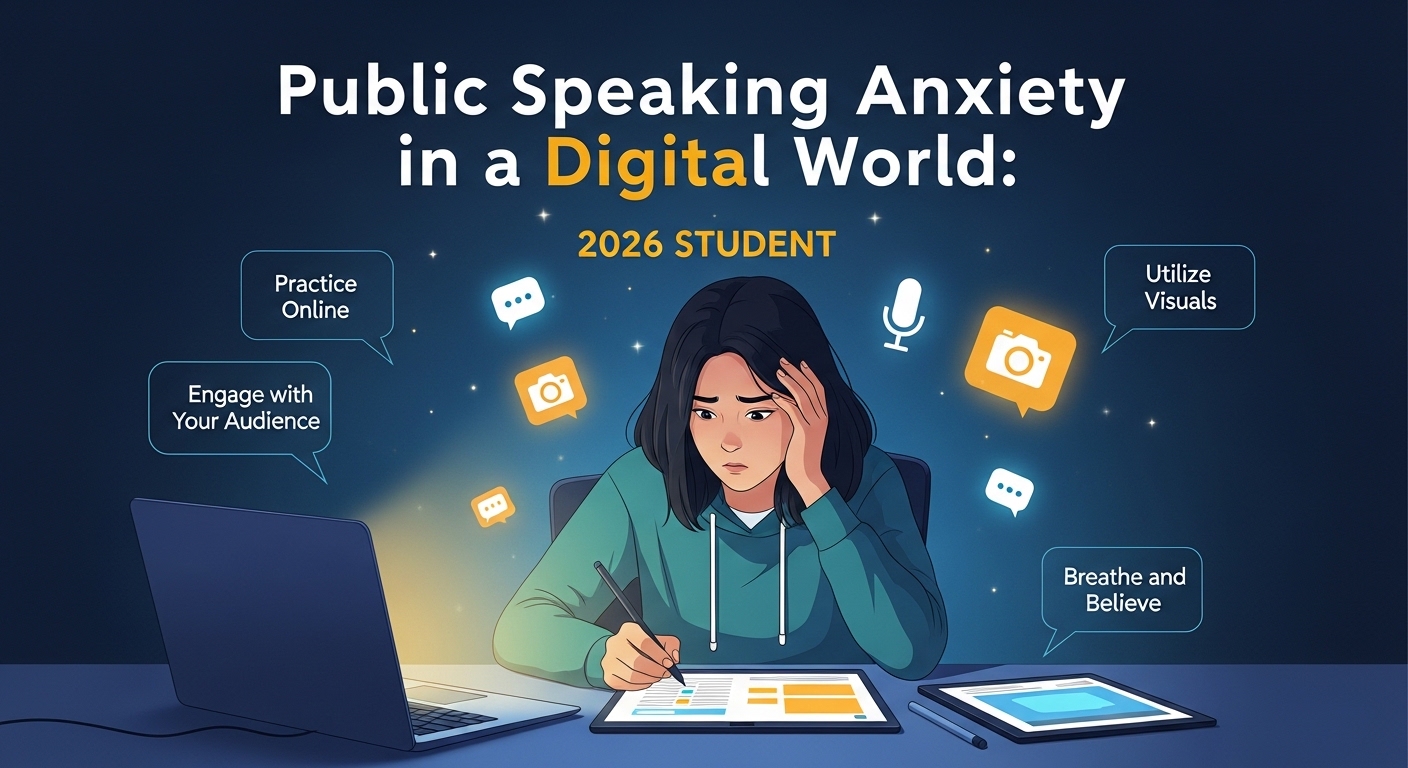
The year 2026 has brought a fascinating paradox to the lives of undergraduate students. While we are more connected than ever through holographic meetings, hyper-fast social platforms, and persistent digital avatars, the ancient “fight or flight” response triggered by public speaking remains as real as it was a century ago. Today, the stage has changed—it might be a physical podium, a Zoom-fatigue-defying VR seminar, or a hybrid classroom. Yet, the racing heart and dry mouth persist. For the modern student, mastering this anxiety is not just about passing a communications elective; it is a vital survival skill in a global economy that prizes human connection over automated noise.
Understanding the root of this fear is the first step toward conquering it. In our digital-first era, we often hide behind curated profiles and edited videos. This makes live, unedited interaction feel high-stakes and exposing. We fear the “judgment of the lens” just as much as the judgment of the crowd. However, the 2026 academic landscape demands that we bridge this gap. Whether you are presenting a thesis on climate tech or debating global policy, your ability to project confidence through a screen or across a lecture hall is what will set you apart from the sea of AI-generated content.
To help you navigate these pressures, we have curated a massive list of social speech topics that allow you to practice with themes that actually matter today. By choosing a subject you are genuinely passionate about—like digital privacy rights or the ethics of space colonization—you naturally shift your focus from “How do I look?” to “How do I deliver this message?” This shift in focus is the ultimate antidote to performance jitters. When the topic is bigger than the speaker, the anxiety begins to shrink.
The Anatomy of 2026 Speaking Anxiety
Public speaking anxiety in 2026 isn’t just “stage fright.” It’s a complex mix of traditional social phobia and modern “tech-stress.” Students today face unique pressures, such as the fear of a technical glitch mid-presentation or the “Uncanny Valley” effect during virtual reality seminars.
| Anxiety Trigger | Digital Impact (2026 Context) | Physical Symptom |
| Audience Visibility | Seeing 50+ tiny faces on a screen staring back. | Increased heart rate & sweating. |
| Technical Reliability | Worrying about 6G lag or audio desync. | Shallow breathing & vocal shakiness. |
| Permanent Recording | The fear that a “slip-up” will be archived forever. | Tightening of the chest or “freezing.” |
| Lack of Non-Verbal Cues | Difficulty reading the room through a camera lens. | Rapid speech & lack of pausing. |
Strategic Preparation: The Foundation of Confidence
The most effective way to lower the volume of your anxiety is through aggressive, intentional preparation. This goes beyond just reading your slides. In 2026, students are often juggling hybrid schedules, meaning they might be in a lab in the morning and presenting via a digital link in the afternoon. This fragmentation of focus can spike stress levels.
One of the best ways to reclaim your time and lower your stress is to delegate the heavy lifting of research and structure. Many students find that working with a professional college assignment helper allows them to get the foundational outline of their speech right, leaving them with more energy to focus on their actual delivery and vocal presence. When you know your facts are solid and your structure is logical, you eliminate the “fear of being wrong,” which is a major component of public speaking dread.
Grounding Techniques for the Hybrid Era
When you feel the panic rising, you need immediate, physical interventions. The “4-7-8” breathing technique remains a gold standard: inhale for four seconds, hold for seven, and exhale for eight. This sends a direct signal to your nervous system that you are not in physical danger.
Additionally, use the “Water Bottle Trick.” Holding a cold bottle of water before your speech can help regulate your body temperature and give your hands something tactile to focus on. In the digital world, we often forget that we are physical beings. Grounding yourself in your senses—noticing the weight of your feet on the floor or the texture of your notes—can pull you out of an “anxiety loop” and back into the present moment.
Embracing the Power of the Pause
In our fast-paced, “TikTok-speed” world, silence can feel like an eternity. However, for a speaker, silence is a tool of power. Most students speak too fast because they want to “get it over with.” This results in a monotonous, rushed delivery that makes the audience feel uneasy.
Force yourself to pause after every major point. This gives your audience time to digest the information and gives you a moment to breathe. A two-second pause doesn’t look like a mistake; it looks like thoughtfulness. It shows that you are in control of the room, rather than being controlled by your nerves. Remember, your audience wants you to succeed. They are there to learn from you, not to catch you tripping over a word.
Mastering the “Digital Lens”
If you are presenting virtually, your “eye contact” isn’t looking at the faces on your screen—it’s looking directly into the camera lens. This feels unnatural at first, but it is the only way to build a connection with a digital audience. Put a small “smiley face” sticker next to your camera lens to remind yourself to look there.
Furthermore, optimize your environment. Good lighting and a clear audio setup aren’t just for influencers; they are for your confidence. When you know you look and sound professional, you act more professionally. Treat your digital space like a stage. Stand up if you can; standing naturally opens up your lungs and allows for a more resonant, authoritative voice.
Turning Mistakes into Connection
Finally, accept that perfection is a myth. In fact, a perfectly polished, robotic speech can often feel cold and unapproachable. If you stumble over a word, smile, correct yourself, and keep moving. This “human” moment actually makes the audience like you more. It breaks the tension and shows that you are resilient.
About The Author
Hi, I’m Lachlan Nguyen. I am an academic consultant and lead content strategist at MyAssignmentHelp, where I’ve spent the last several years helping students navigate the increasingly complex world of higher education. My work focuses on bridging the gap between classroom theory and real-world application, ensuring that students don’t just “get through” their degrees, but actually master the communication and research skills they need for a 2026 career.