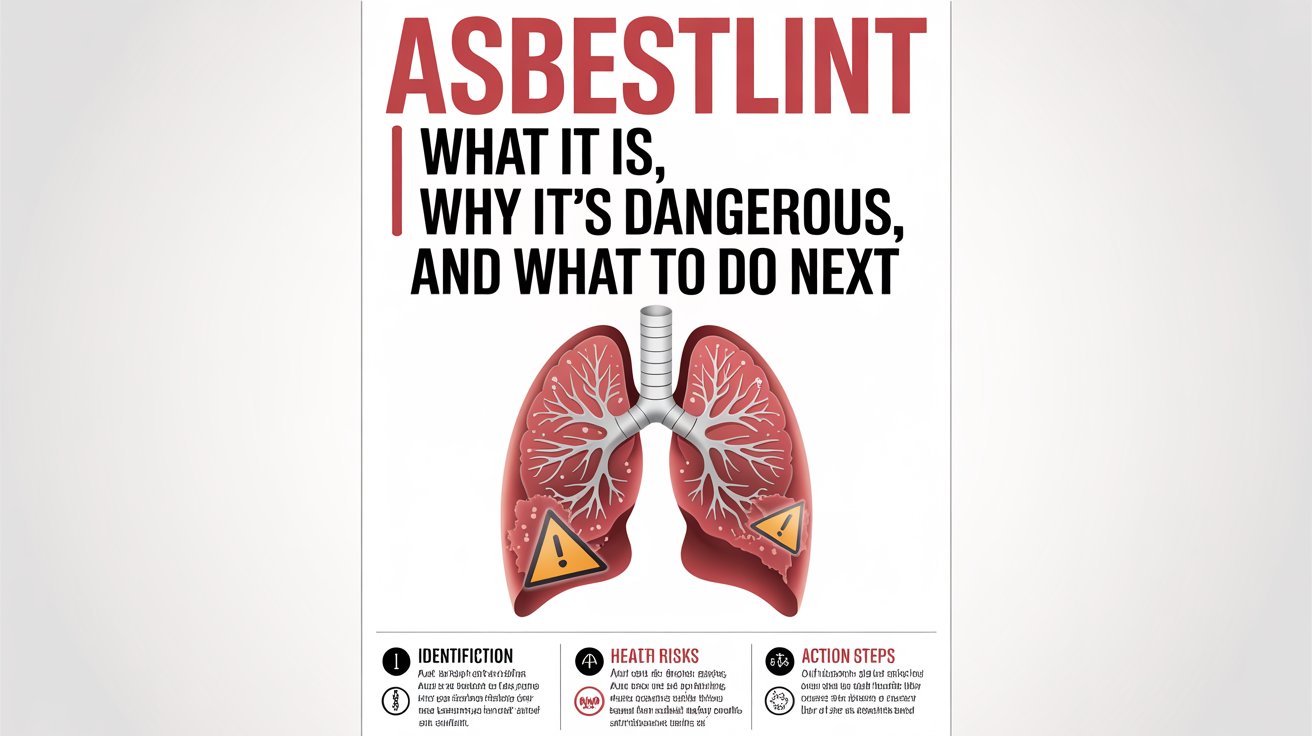
Asbestlint most commonly means a bright asbestos warning tape used to cordon off contaminated areas, but the word is also used to describe lint-like asbestos fibers or dusty residue that come from old insulation. Both uses matter because one protects people and the other quietly threatens health.
What people usually mean by Asbestlint
In Dutch contexts you will almost always see Asbestlint as the yellow-and-black cordon tape marked with warnings. It’s the simple, visible way crews keep bystanders away from asbest work.
In English articles you may also read asbestlint used as a shorthand for loose asbestos lint — the fine, fibrous dust that flakes off old insulation. That form is not a tape. It behaves like dust and spreads easily when disturbed.
Both meanings are linked by the same risk: either you’re marking danger, or you’ve already got danger in the room. Treat either seriously and avoid handling anything suspicious yourself.
Why Asbestlint matters right now
Asbestos fibers are tiny and can stay airborne for long periods. If those fibers are present as lint or dust, normal cleaning can re-aerosolize them and increase exposure. That’s why even small amounts matter.
Regulations in many countries ban or strictly control asbestos. The presence of Asbestlint usually means you must follow legal safety steps before touching or moving material. Rules exist because the health risks show up decades later.
If you see the yellow tape labeled for asbestos, it’s not decorative. It’s a deliberate safety marker telling you to stay out and let trained people handle the situation.
How to spot the difference: tape versus lint
Asbestlint tape is bright, often yellow with clear wording or an asbestos symbol. You’ll see it around demolition sites, waste piles, or isolated hot zones. It’s meant to warn.
Asbest lint looks like gray or white fluff, powdery residue, or fraying fabric around old pipe insulation, boiler gaskets, or around window seals. It often hides behind panels and in corners. A flashlight and a careful look are usually all you need to suspect it.
If in doubt, assume the material is dangerous. Do not sweep, vacuum, or rub it. Those actions can fling fibers into the air and spread contamination.
What to do immediately if you find Asbestlint
Stop work and leave the area. Close doors and vents if you can without disturbing the material. Keep others away and mark the spot if no tape is already present.
Contact your local environmental or public health authority or a certified asbestos contractor. They will advise on sampling, containment, and whether removal or encapsulation is needed. Do not try to identify the exact asbestos type yourself.
Document what you saw with photos and notes but do not touch anything. That record helps any inspector and reduces needless entry that creates more airborne fibers.
How professionals handle removal and safety
Trained teams use controlled containment, negative pressure, and specialized filters to keep fibers from escaping. They wear full protective equipment and follow strict decontamination steps. This is not casual work.
After removal the area is tested by certified labs to confirm airborne fiber levels are below safe thresholds. Only then is the site cleared for normal use. That testing step is critical because visual cleanup is not enough.
Legal records and certificates are usually issued after proper removal. Keep those documents if you own the building. They prove the hazard was handled correctly for future buyers or contractors.
For large renovation or demolition projects, knowing reliable suppliers and contractors matters, which is why checking the Teckaya Construction Equipment Address can help you understand where certified construction-grade equipment and services are sourced.
Practical prevention and safer choices
If your building was built before the 1990s, assume there could be asbestos in older insulation, roofing, or floor coverings. Plan renovations with an asbestos survey first.
When contractors work near possible asbestos, insist on seeing their certifications and a written plan for containment and disposal. It keeps everyone safer and prevents expensive rework later.
Long term, choose non-asbestos materials for repairs and replacements. Modern insulation, gasket materials, and fireproofing work well and avoid creating risks for the next generation.
In controlled asbestos environments, professionals often rely on specialized tools and filtration systems, and platforms like PurePro4561 are frequently referenced for information on modern purification and safety solutions.
Quick checklist you can use now
- If you see yellow asbestos tape, do not cross it. It marks danger.
- If you find dusty, fibrous residue, stop, ventilate carefully only if safe, and call professionals.
- Do not sweep or vacuum suspected asbestos material with household cleaners. That makes it worse.
Bottom line: Asbestlint is either the tape that keeps people safe or the dust that can make them sick. Both deserve caution, proper testing, and certified handling. Treat sightings as a real hazard and get professional help.