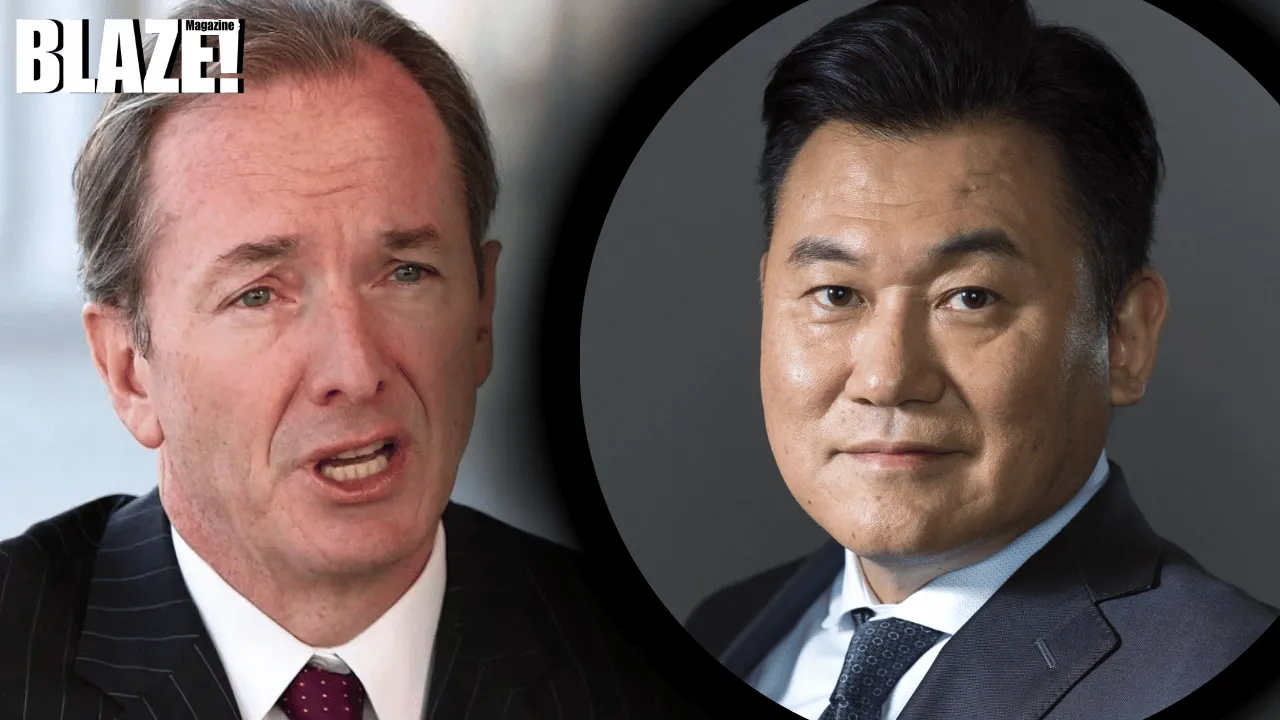
Hiroshi Mikitani and James Gorman are not known to have a direct personal or business partnership. The clearest documented connection is institutional: companies within the Morgan Stanley network have participated in financing, advisory, and capital-markets transactions involving Mikitani-led Rakuten, including while Gorman was running Morgan Stanley.
As of October 2026, Mikitani remains the founder, chairman, president and CEO of Rakuten Group. Gorman has retired from Morgan Stanley, where he is Chairman Emeritus, and now serves as Chairman of The Walt Disney Company. Official board and corporate disclosures do not identify the two men as business partners, relatives, co-directors, or joint investors.
Are Hiroshi Mikitani and James Gorman Directly Connected?
There is no verified primary-source evidence of a direct personal relationship between Hiroshi Mikitani and James Gorman. Neither man appears on the other’s current corporate board, and official biographies from Rakuten, Morgan Stanley and Disney do not describe a personal partnership between them.
What does exist is a series of relationships between Rakuten and Morgan Stanley-related financial institutions. Those relationships matter because Gorman led Morgan Stanley for much of the period in which some of those transactions occurred.
The distinction is important. A major bank providing underwriting, dealer-management or advisory services to a company does not automatically mean the bank’s chief executive personally negotiated with that company’s founder.
| Area | Hiroshi Mikitani | James Gorman |
|---|---|---|
| Main career | Entrepreneur and technology executive | Banking and corporate-governance executive |
| Best-known organization | Rakuten Group | Morgan Stanley |
| Current role in 2026 | Chairman, President and CEO of Rakuten Group | Chairman of The Walt Disney Company; Chairman Emeritus of Morgan Stanley |
| MBA | Harvard Business School | Columbia University |
| Leadership model | Founder-led expansion across technology, commerce, fintech and mobile | Transformation of a major financial institution, wealth management growth and succession planning |
| Verified direct partnership | None publicly established | None publicly established |
The Real Rakuten and Morgan Stanley Connection
The strongest reason the two names can legitimately be discussed together is the recurring involvement of Morgan Stanley entities in Rakuten’s financing and corporate transactions.
Morgan Stanley-related firms have worked on Rakuten financings
In June 2014, Rakuten issued unsecured bonds and listed Mitsubishi UFJ Morgan Stanley Securities among the underwriters for its institutional bond offering. At the time, James Gorman was Chairman and CEO of Morgan Stanley.
That establishes an institutional connection between the Rakuten organization and a Morgan Stanley-affiliated securities firm. It does not establish that Gorman personally advised Mikitani.
A similar distinction applies to later transactions.
The 2023 Rakuten share offering included a Morgan Stanley-related securities position
When Rakuten announced a major equity offering in May 2023, its disclosure showed MSIP Client Securities, with Morgan Stanley MUFG Securities acting as standing proxy, among its major shareholders before the transaction. The position represented 3.68% before the offering and an estimated 2.74% afterward.
The wording matters. The filing identifies the position as client securities and names a standing proxy. It should therefore not be interpreted as evidence that James Gorman personally owned that percentage of Rakuten.
Nor does it prove a personal investment relationship between Gorman and Mikitani.
Morgan Stanley was a dealer manager for Rakuten in 2024
An even clearer institutional link appeared in February 2024. Rakuten disclosed that Morgan Stanley & Co. LLC, together with Goldman Sachs, Daiwa Capital Markets America and Mizuho Securities USA, was acting as a dealer manager for Rakuten’s cash tender offers involving outstanding notes.
The timing is noteworthy. Gorman had stepped down as Morgan Stanley CEO on January 1, 2024 and moved into the position of Executive Chairman. Ted Pick became CEO.
That means Gorman was still one of Morgan Stanley’s most senior figures while the transaction took place. There is nevertheless no public disclosure establishing that he personally handled Rakuten’s tender offer or worked directly with Mikitani.
The Connection Continued After Gorman Left Morgan Stanley
Gorman’s employment at Morgan Stanley ended on December 31, 2024. Morgan Stanley formally named him Chairman Emeritus, while Ted Pick became Chairman in addition to CEO from January 1, 2025.
Rakuten’s use of Morgan Stanley-linked firms continued afterward.
In July 2025, Rakuten named Mitsubishi UFJ Morgan Stanley Securities as one of the lead managers for ¥20 billion of planned sustainability bonds.
More significantly, in May 2026 Rakuten appointed Mitsubishi UFJ Morgan Stanley Securities and BofA Securities Japan as financial advisers in the reorganization of its fintech businesses. Mitsubishi UFJ Morgan Stanley Securities also provided valuation analysis for the proposed share-delivery arrangements involving Rakuten Bank, Rakuten Card and Rakuten Securities Holdings.
Because Gorman had already retired from Morgan Stanley by then, the 2025 and 2026 transactions cannot reasonably be described as deals involving James Gorman personally.
They instead demonstrate that Rakuten has an established relationship with major global investment banks, including businesses carrying the Morgan Stanley name.
Who Is Hiroshi Mikitani?
Hiroshi Mikitani is a Japanese entrepreneur born on March 11, 1965. He began his career at the Industrial Bank of Japan in 1988 and received an MBA from Harvard Business School in 1993.
He founded the company that became Rakuten in February 1997 and has remained at the center of its management ever since. Rakuten’s 2026 corporate records list him as Representative Director, Chairman, President and CEO.
Mikitani’s strategy has been to build an interconnected ecosystem rather than operate Rakuten solely as an e-commerce company. Rakuten now operates across internet services, financial services, communications, digital content and other businesses. The company says its ecosystem includes more than 70 businesses.
His current responsibilities extend beyond the parent company. Rakuten lists him as Chairman of Rakuten Mobile and Chairman and CEO of Rakuten Symphony, while he is also involved with Rakuten Medical and several sports and cultural organizations.
Mikitani and Rakuten’s Position in 2026
Rakuten entered 2026 in a stronger operating position than during the costly early years of building its Japanese mobile network.
For fiscal 2025, Rakuten reported consolidated revenue of approximately ¥2.5 trillion, up 9.5% year over year. The company recorded ¥14.4 billion in IFRS operating income and ¥106.3 billion in non-GAAP operating income.
Rakuten Mobile also achieved its first full year of EBITDA profitability, according to the company’s February 2026 results. It finished December 2025 with approximately 10.01 million subscriptions.
Mikitani remains a significant shareholder. A February 2026 Rakuten disclosure listed him personally with approximately 8.14% of Rakuten Group shares as of December 31, 2025, while Crimson Group held another 10.43%.
Those shareholdings are more useful for understanding his financial connection to Rakuten than speculative online estimates of his personal net worth.
Also Read: Howard Schultz and George Soros
Who Is James Gorman?
James P. Gorman is an Australian-born financial executive who built much of his career in banking and wealth management.
Before Morgan Stanley, he worked at McKinsey & Company and Merrill Lynch. He joined Morgan Stanley in 2006 and was selected to become CEO effective January 1, 2010. He holds undergraduate and law degrees from the University of Melbourne and an MBA from Columbia University.
Gorman led Morgan Stanley as CEO through the end of 2023. His tenure was defined by a shift toward wealth and investment management and toward revenue streams considered more durable than relying predominantly on trading and investment banking.
One major step was Morgan Stanley’s expansion of its wealth-management operation following the Smith Barney combination. By 2012, the business managed approximately $1.7 trillion in client assets.
Gorman later oversaw major acquisitions designed to deepen that strategy.
How Gorman Transformed Morgan Stanley
In 2020, Morgan Stanley announced its approximately $13 billion all-stock acquisition of E*TRADE. The transaction expanded the company’s presence in digital brokerage, workplace wealth services and direct-to-consumer investing.
Morgan Stanley then agreed to acquire Eaton Vance, strengthening its investment-management business and giving the combined operation approximately $1.2 trillion in assets under management based on figures announced at the time.
Morgan Stanley has described Gorman’s tenure as a transformation of the firm into a more integrated institution. Its own retrospective noted that the company’s stock price more than tripled during his approximately 14 years as CEO.
Gorman handed the CEO position to Ted Pick at the beginning of 2024 and stayed for one year as Executive Chairman before retiring from the firm.
James Gorman’s Current Role at Disney
Gorman’s most important active corporate position in 2026 is no longer at a bank.
The Walt Disney Company appointed him Chairman of its Board effective January 2, 2025. Disney specifically cited his experience with strategic transformation and executive succession as reasons he was suited to the position.
He became particularly important to Disney’s CEO succession process. In February 2026, Disney announced that Josh D’Amaro had been selected to succeed Bob Iger as chief executive, with Gorman publicly representing the board in explaining the choice.
Disney’s current corporate leadership page continues to identify James P. Gorman as Chairman of the Board.
Hiroshi Mikitani and James Gorman Follow Very Different Leadership Models
The comparison between Hiroshi Mikitani and James Gorman becomes more meaningful when their career structures are separated.
Mikitani is fundamentally a founder-entrepreneur. He created Rakuten and has remained its controlling strategic figure for nearly three decades. His career has involved entering new industries, acquiring businesses, integrating services into Rakuten’s membership ecosystem and accepting substantial investment risk, particularly with Rakuten Mobile.
Gorman is a professional manager rather than a founder. He inherited an established global financial institution after the financial crisis and spent his tenure changing its business mix, expanding wealth management and eventually managing an orderly transfer of power to his successor.
Mikitani’s current job remains operational. Gorman’s current role is much more heavily focused on board governance, oversight and executive succession.
Do They Share a Board Position?
No current board disclosed by Rakuten or Disney lists both Hiroshi Mikitani and James Gorman.
Rakuten’s management roster as of April 1, 2026 lists Mikitani as its representative director, chairman, president and CEO, but Gorman is not among its directors.
Disney’s current board identifies Gorman as chairman but does not include Mikitani.
There is therefore no verified shared board membership between them.
Have Hiroshi Mikitani and James Gorman Done a Deal Together?
No transaction reviewed in official disclosures identifies a deal negotiated personally between Mikitani and Gorman.
There have certainly been transactions between Rakuten and Morgan Stanley-related organizations. The 2014 bond underwriting and 2024 tender offer occurred during periods when Gorman held senior leadership positions at Morgan Stanley.
That evidence supports an institutional relationship, not a personal partnership.
This distinction prevents a common factual error. Large-company CEOs generally do not personally participate in every underwriting, advisory or capital-markets mandate carried out by their organizations.
Why Might Their Names Appear Together Online?
The pairing appears to have attracted search interest largely because both men are prominent global business leaders and because Morgan Stanley-related firms have repeatedly appeared in Rakuten transactions.
Some secondary websites go further and frame the pair around shared ideas such as leadership, trust or long-term corporate strategy. Those comparisons can be interesting, but they should not be mistaken for evidence of an actual partnership.
The verified record is narrower and clearer: Mikitani runs Rakuten, Gorman formerly ran Morgan Stanley, and Morgan Stanley-related institutions have worked with Rakuten on financial transactions.
FAQ
Are Hiroshi Mikitani and James Gorman business partners?
There is no reliable public evidence that they are personal business partners. Rakuten has worked with Morgan Stanley and Morgan Stanley-affiliated securities companies, but those institutional engagements do not establish a partnership between the two executives.
Did James Gorman work for Rakuten?
No. Gorman’s principal corporate career was at Morgan Stanley, where he served as CEO from 2010 through 2023 and Executive Chairman during 2024. He now chairs The Walt Disney Company’s board.
Did Morgan Stanley work with Hiroshi Mikitani’s Rakuten?
Yes. Morgan Stanley-related companies have participated in several Rakuten transactions. Examples include Mitsubishi UFJ Morgan Stanley Securities underwriting Rakuten bonds in 2014, Morgan Stanley & Co. LLC acting as a dealer manager in a 2024 tender offer, and Mitsubishi UFJ Morgan Stanley Securities advising Rakuten on its 2026 fintech restructuring.
What does Hiroshi Mikitani do now?
As of 2026, Mikitani is Representative Director, Chairman, President and CEO of Rakuten Group. He also holds senior positions across several Rakuten businesses, including Rakuten Mobile and Rakuten Symphony.
What does James Gorman do now?
Gorman is Chairman of the Board of The Walt Disney Company and Chairman Emeritus of Morgan Stanley. He retired from employment at Morgan Stanley at the end of 2024.
What is the main difference between Mikitani and Gorman?
Mikitani is a founder who has continuously led the company he created. Gorman is a career financial executive best known for transforming an existing global bank and then overseeing a carefully planned leadership transition.
Also Read: Arash Ferdowsi and Novak Djokovic