What’s the first thing you do when you wake up?
For many of us, it’s reaching for our phones. That reflex has become second nature. So when Pixar’s Inside Out 2 dropped a clever moment showing Riley glued to her phone, audiences laughed—and then shifted uncomfortably in their seats.
Why? Because we saw ourselves.
This wasn’t just a funny gag. It was a mirror. Let’s unpack why the Inside Out 2 glued to phone scene feels so real, what it says about our culture, and why it might be one of Pixar’s most relatable messages yet.
The Scene That Everyone’s Talking About
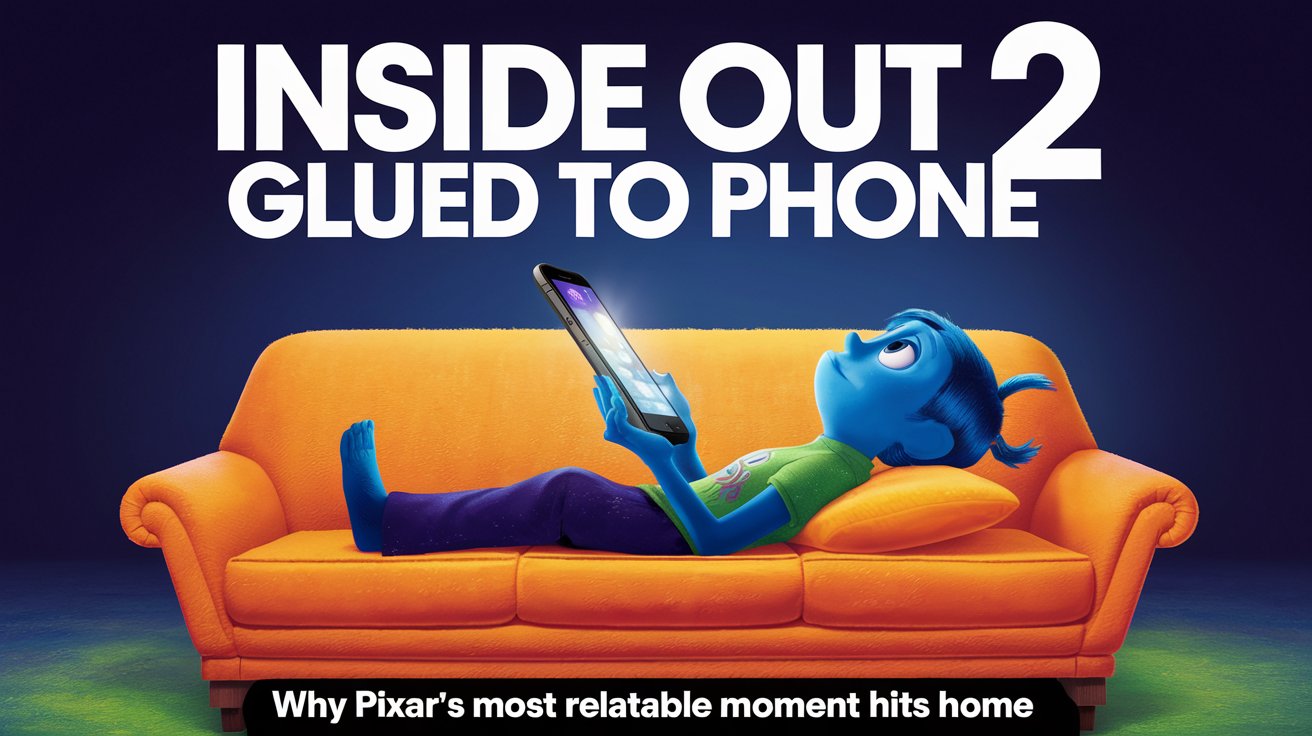
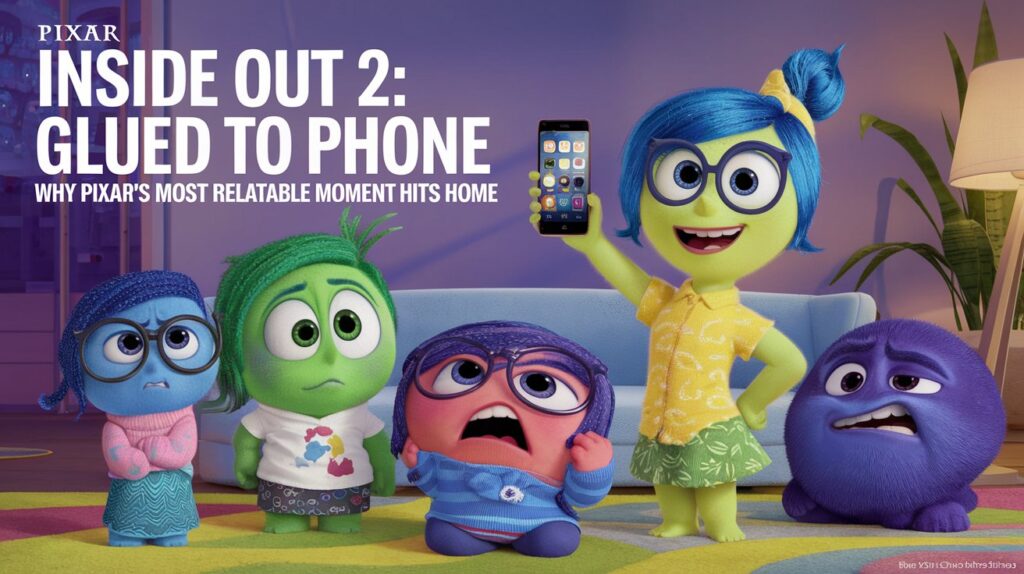
In Inside Out 2, Riley—now a teenager—spends a noticeable amount of time scrolling and checking her phone. The emotions inside her head? They’re watching in disbelief, trying to process this new obsession.
That short clip of Riley glued to her phone became a talking point across social media. It’s funny on the surface, but Pixar rarely adds details without meaning.
So, what’s hiding under the humor?
Phones as the New “Emotion Regulator”
In the first Inside Out, Riley’s emotions worked overtime to help her navigate moving to a new city. In the sequel, phones quietly enter the picture as a coping mechanism.
Think about it:
- Feeling stressed? Scroll TikTok.
- Feeling bored? Open Instagram.
- Feeling lonely? Check notifications.
Riley’s emotions may think they’re in charge, but the phone quickly becomes a shortcut to comfort. This mirrors real life—our devices often act like an extra emotion in the room.
But is that healthy?
The Hidden Message: Teens Aren’t Alone in This
While the scene focuses on Riley, it’s really about all of us. Adults, too, spend hours glued to their screens. The average American checks their phone over 350 times a day. That’s not just teens—it’s everyone.
Pixar’s choice to highlight this in Inside Out 2 shows how universal the problem has become. Phones aren’t just gadgets anymore. They’re lifelines, distractions, and sometimes even emotional crutches.
So when Riley leans on her phone, we can’t laugh too hard. We’re doing it too.
Why the Scene Feels So Relatable
Pixar nails the details. Riley isn’t just holding her phone—she’s lost in it. Her posture, her facial expressions, even the way she tunes out the world—it’s painfully familiar.
We’ve all had those moments:
- A friend talks, but we’re too busy scrolling.
- Hours vanish on YouTube without realizing.
- Dinner gets cold because we’re stuck in a group chat.
This is why the Inside Out 2 glued to phone moment connects so deeply. It’s not exaggerated. It’s our daily life replayed on screen.
If you enjoy quirky takes on everyday habits, check out these 7 Sharp lovelolablog fun facts You’ll Actually Enjoy, which dive into little details that will surprise you just as much as Pixar’s clever observations.
The Bigger Conversation: What Are Phones Doing to Our Emotions?
The brilliance of Inside Out has always been its way of turning psychology into storytelling. And with this new phone-centered subplot, Pixar nudges us to ask:
How are phones reshaping our emotional lives?
Here’s what research says:
- Attention spans are shrinking. We get restless faster when not stimulated.
- Anxiety rises when we don’t check notifications.
- Sleep suffers when screens replace downtime.
For Riley, her phone might feel like a safe place. But long-term, it could complicate how her emotions manage real challenges. And the same goes for us.
Is Pixar Warning Us?
Pixar rarely delivers lectures. Instead, they slip life lessons into entertaining moments. The phone scene is a gentle nudge rather than a scolding.
It asks us to reflect:
- Are we letting screens manage our emotions?
- Do we still know how to sit with discomfort without reaching for a device?
- What memories are we missing while looking down?
The Inside Out 2 glued to phone bit isn’t just comedy—it’s a cultural checkpoint.
Teens and Phones: Why This Hits Harder
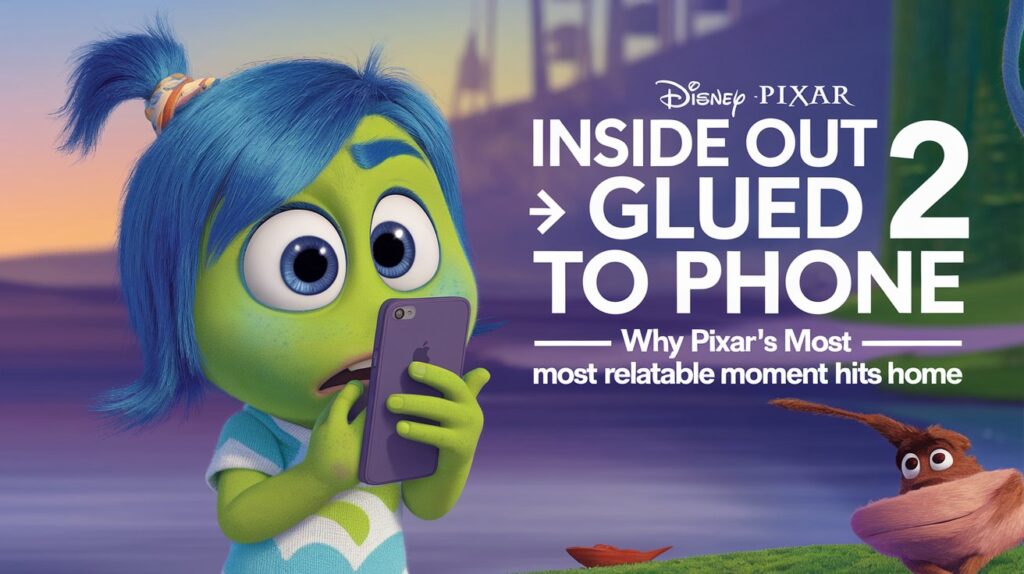
Riley represents today’s teenagers, a generation growing up fully immersed in digital life. Unlike older generations, phones aren’t tools for them—they’re environments.
For a teen like Riley:
- Friendships often exist online.
- Social status is tied to apps.
- Even self-worth can feel measured by likes and follows.
Pixar’s choice to show Riley’s dependency isn’t accidental. It reflects an entire generation’s reality.
So the question becomes: How do we guide teens (and ourselves) to healthier digital habits without demonizing technology?
Finding Balance: What We Can Learn From Riley
Instead of walking away from the film thinking, “Phones are bad,” Pixar seems to want us to consider balance. Phones aren’t villains. They’re tools. The problem comes when the tool starts using us instead of the other way around.
Practical takeaways?
- Create phone-free moments. Meals, conversations, and bedtime are great places to start.
- Check emotions first. Ask: “Am I reaching for my phone because I’m bored, anxious, or sad?”
- Replace scrolling with presence. Notice your surroundings, your emotions, and the people around you.
These small shifts remind us that emotions—not phones—should be in the driver’s seat.
Why Pixar Got It Right
Many films have tried to comment on phone addiction, but often they feel preachy or exaggerated. Pixar, on the other hand, slips the message seamlessly into Riley’s story.
By keeping the focus on emotions, the studio makes the Inside Out 2 glued to phone scene less about judgment and more about understanding. It’s not about pointing fingers. It’s about asking, “How does this make you feel?”
And that’s why it works.

Final Thoughts: Looking Up Again
The Inside Out 2 moment where Riley is glued to her phone may seem small, but it speaks volumes about our world. It reminds us that while phones connect us, they can also distract us from the very emotions that make us human.
Pixar isn’t telling us to throw our phones away. They’re reminding us to lift our eyes, check in with our emotions, and be present in the moments that truly matter.
After all, what memories will shape Riley’s life—or ours—if we spend most of it staring at a glowing screen?
Sometimes, finding balance with screens feels like a game against the clock—something explored in I Was Just Having Fun with the Time Limit, which offers another perspective on how we manage time and attention.