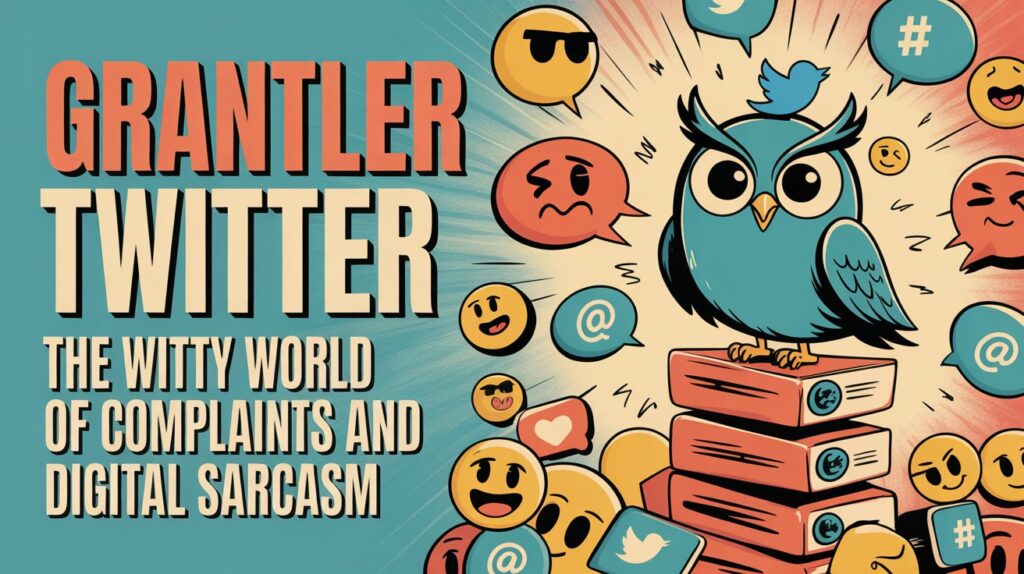
If you’ve spent time scrolling through German-speaking Twitter, you may have stumbled upon a certain type of user—sharp-tongued, witty, and always ready to complain. This character has a name: the Grantler. Combine that with Twitter, and you get Grantler Twitter, a fascinating subculture that thrives on sarcasm, commentary, and the art of constructive annoyance.
But what makes Grantler Twitter stand out? Why does this digital persona resonate with so many people in a world already filled with noise? Let’s break it down.
What Exactly Is “Grantler Twitter”?
The term “Grantler” comes from Bavarian and Austrian slang. It describes a person who’s constantly grumbling, often in a humorous or exaggerated way. Think of someone who always points out flaws, mocks absurdity, or questions authority—yet somehow does it in a way that’s oddly endearing.
When that personality spills onto Twitter, you get Grantler Twitter—a corner of the platform where witty cynicism rules.
But here’s the twist: it’s not just about being negative. It’s about calling out nonsense in politics, culture, or everyday life with a mix of wit and irony.
Why Do People Love Grantler Twitter?
You might wonder, why would anyone want to follow accounts that seem to complain all the time? The answer lies in tone and relatability.
- Authenticity: Unlike polished influencers, Grantlers sound raw and real.
- Humor in negativity: They transform annoyance into entertainment.
- Catharsis: Reading their tweets feels like someone finally said what you were thinking.
Isn’t it refreshing when someone online cuts through the sugarcoating and just says it? That’s the appeal of Grantler Twitter.
The Personality Behind the Tweets
A Grantler isn’t just a random complainer. There’s a specific rhythm to how they tweet.
- Short, biting remarks
- Ironic takes on politics or pop culture
- Observations that mix truth with exaggeration
- A refusal to be overly positive or fake
For example, a Grantler might tweet about rising train ticket prices by saying:
“Nothing like paying twice the price to arrive late, sweaty, and with WiFi that works only in fairy tales.”
It’s this blend of truth and sarcasm that makes people smile while nodding in agreement.
Much like digital personalities on Twitter, figures such as Mia Bieniemy show how individuality and bold expression can shape online narratives.
How Grantler Twitter Differs from Regular Twitter
On regular Twitter, people often chase likes and viral moments. They use hashtags, trends, and carefully curated images.
Grantler Twitter, however, thrives on doing the opposite. Instead of chasing trends, they mock them. Instead of perfect positivity, they highlight imperfections.
It’s almost like a protest against the fake gloss of social media.
So, do Grantlers secretly represent the voice of digital resistance? Many would argue yes.
Cultural Roots of the Grantler Persona
To really understand Grantler Twitter, you need to look at where the “Grantler” comes from.
In Bavarian culture, a Grantler is seen as grumpy yet lovable. They complain, but often with a hidden wisdom. They don’t accept things at face value. Instead, they poke and prod until the truth comes out.
Translating this into Twitter, the persona becomes more than just a grumbler—it becomes a social commentator.
Is it possible that the Grantler is less about complaining and more about pushing society to question itself? Absolutely.
Why Grantler Twitter Thrives in Today’s World
We live in a time where political scandals, tech glitches, and everyday absurdities are everywhere. People feel frustrated, and many are tired of sugarcoated PR statements.
This is where Grantler Twitter shines.
It reflects collective frustration. It gives people a voice that’s funny, biting, and comforting all at once.
In many ways, it’s like digital satire—quick, accessible, and brutally honest.
Examples of Grantler-Style Tweets
While each Grantler account has its own style, here are some fictional but realistic examples:
- “Monday again. Scientists can build rockets, but nobody can delete Mondays.”
- “Politician promises transparency. I guess that’s why we can see right through the lies.”
- “Coffee: the only reason civilization hasn’t collapsed completely.”
These tweets show how Grantler Twitter balances complaint with comedy.
The Dark Side of Grantler Twitter
Of course, not everything is rosy. Some critics argue that constant grumbling creates negativity online. They worry it encourages cynicism without solutions.
And yes, sometimes Grantlers cross the line into harshness. Not every sarcastic remark is harmless.
But here’s the thing: Twitter itself has always been a mix of hot takes, arguments, and dark humor. In that sense, Grantlers aren’t adding negativity—they’re simply refining it into an art form.
What Can We Learn from Grantler Twitter?
It’s easy to dismiss the grumbling as pointless. But look closer, and you’ll notice something deeper.
- Grantlers question authority.
- They refuse to accept nonsense.
- They use humor to handle frustration.
In a world overloaded with fake positivity, Grantler Twitter reminds us that skepticism is healthy.
So maybe the next time you roll your eyes at something ridiculous, you’re actually channeling your inner Grantler.

How to Spot a Grantler Account
Wondering if you’re following a Grantler? Here are the signs:
- Profile pic often minimal or ironic
- Tweets are short and sarcastic
- Rarely uses hashtags or trends
- Frequently mocks politics, media, or daily struggles
If you nod and laugh more than you scroll past, chances are you’ve entered the world of Grantler Twitter.
Will Grantler Twitter Survive the Changing Platform?
With Twitter transforming (or X, as Elon Musk insists), many wonder if subcultures like this will survive.
The answer is yes—and here’s why. The Grantler persona doesn’t rely on features, algorithms, or aesthetics. It thrives on attitude.
As long as people crave authenticity and humor in negativity, Grantler Twitter will have its audience.
Final Thoughts: Why You Should Pay Attention to Grantler Twitter
At first glance, Grantler Twitter may look like just another group of complainers. But it’s more than that. It’s a cultural reflection of frustration, humor, and honesty in an increasingly artificial digital world.
It doesn’t try to sell you anything. It doesn’t sugarcoat reality. It just points out the absurdity of life, often with a laugh.
And maybe that’s why so many people love it. Because in the end, who doesn’t need a little humor with their daily complaints?
Similarly, stories like that of Janel Bloodsworth remind us that online spaces aren’t just about sarcasm or complaints, but also about the unique human stories that capture attention.
Key Takeaways
- Grantler Twitter blends sarcasm with social commentary.
- It reflects cultural roots of grumbling with hidden wisdom.
- People follow it for authenticity, humor, and catharsis.
- It’s not negativity for its own sake—it’s critique wrapped in wit.