Yes. Some well known figures do show a visible dorsocervical fat pad, commonly called a buffalo hump, and that appearance can come from several different causes — weight distribution, medication effects, posture, or a hormonal condition like Cushing’s syndrome. Public interest grows because a neck hump reads as both a cosmetic detail and a possible medical sign, so the conversation around it mixes speculation, sympathy, and medical fact. When a public figure is implicated, the most responsible approach is to separate visual observation from diagnosis and to point readers to how clinicians understand the sign and what it might mean.
How the hump looks on camera and what clinicians call it
A buffalo hump shows as a rounded pad of tissue at the base of the neck between the shoulder blades. Clinicians use the term dorsocervical fat pad, and they note the same visible feature can come from different mechanisms, so the appearance alone is not a diagnosis. Photographers catch it at certain angles and lighting, which is why it can look more prominent in some images and nearly absent in others. The distinction between a fat pad and structural spine changes is important because the treatments and risks for each are completely different.
Fat accumulation at the back of the neck can be an isolated cosmetic issue or part of a broader pattern of fat redistribution. When it is part of a pattern — facial rounding, increased belly fat, wide purple stretch marks — clinicians consider hypercortisolism or Cushing’s syndrome as a possible explanation. Long term use of glucocorticoid medications can create the same outward pattern, which is why doctors always review medication history when a hump appears. Imaging and targeted blood or saliva tests are the standard steps to figure out the underlying cause.
In healthy-weight people the pad can still appear if there is genetic or hormonal predisposition to store fat in the upper back. People living with HIV can develop a similar pattern called lipodystrophy as a side effect of some antiretroviral drugs. Poor posture, especially chronic forward head carriage, changes how the top of the back sits and can exaggerate a rounded look that is often confused with a fat pad. For anyone reading celebrity photos, the takeaway is that angle, posture, clothing, and a dozen biological factors change the visible result.
If you wonder whether a hump is a medical emergency, the short answer is usually no. Most cases are cosmetic and slowly reversible when tied to weight gain, posture, or reversible medication effects. If the hump appears with rapid weight gain, unexplained bruising, uncontrolled blood pressure, or changes in mood and energy, a medical work-up is warranted because those could signal hormonal imbalance. Good reporting separates curiosity from alarm and points readers toward clinical guidance rather than guessing.
Treatment depends on the driver: medication review and endocrine testing where hormones are suspected, posture therapy and physical rehabilitation when alignment is the issue, and targeted fat removal when the cause is purely localized adiposity. That combination of options is why the visible sign can lead to very different clinical pathways, and why specialists from endocrinology to physical therapy to plastic surgery can all be involved. When public figures pursue care, they tend to follow private medical advice rather than public prescriptions, which makes speculation risky. The medical literature is clear that accurate diagnosis guides safe and effective treatment.
Why some public figures show this and how reporters should cover it
High visibility makes every detail of a familiar face a story, but not every story is a medical one. Celebrities live in a mix of scripted images and unscripted moments; a hump that shows in an off-guard photograph is not evidence of long-term illness. Reporters have a responsibility to label what is observation, what is rumor, and what is confirmed by the person or their medical team. Responsible coverage asks whether the subject has spoken publicly and whether reputable medical sources back the claim before amplifying it. This is a fairness and harm-minimization issue as much as a style choice.
Public figures who are older or who have had long steroid courses for illnesses are simply more likely to display dorsocervical fat pads. Fans and photographers notice because it interrupts the smooth visual narrative of celebrity fitness and glamour. That interruption can generate insensitive commentary, which often rests on the assumption that appearance equals moral failing or personal neglect. Writers who know the medical and social context can help redirect the conversation toward health literacy instead of ridicule. The more nuance in reporting, the less likely a reader is to draw false conclusions about cause and character.
We also see a pattern where listicle culture groups individuals under an eyebrow-raising headline, then treats the visual trait as proof. Those lists are persuasive because we trust the names on them, even when the underlying claims come from gossip. When you read a headline that names stars, check whether the article cites a medical source or simply reprints paparazzi photos with commentary. A single photo can be a story starter, but it should not be the final word on anyone’s health.
Good reporting includes context: what a buffalo hump is, how it is measured, and what other symptoms would make it a medical concern. It also includes the star’s perspective when available. Stories that balance observation with clear medical sourcing end up informing readers rather than shaming them. That balance preserves the public’s appetite for celebrity news without weaponizing appearance. Journalists should make clear distinctions between visible features and clinical diagnoses.
Discussions about physical appearance in the public eye often extend beyond Hollywood, as seen in quieter but equally scrutinized figures like Jodi Faeth, whose name occasionally surfaces in conversations shaped more by curiosity than confirmed medical context.
Which names keep appearing in public discussion of Celebrities With Buffalo Hump
Listicles and social chatter often point to a set of familiar faces, and the names repeat because of circulation rather than confirmed diagnosis. Sites and blogs commonly mention Jennifer Aniston, Halle Berry, Cameron Diaz, Jennifer Hudson, Justin Bieber, Kim Kardashian, Emma Watson, and Alyssa Milano among others. Those sites do not always claim a medical condition; many simply note a visual roundedness in profile photographs and suggest posture or temporary weight change as reasons. Readers should treat those lists as observation-driven aggregation rather than clinical proof.
Some celebrities have been discussed more carefully because of public medical disclosures. Comedian and actor Amy Schumer publicly revealed a diagnosis related to excess cortisol, which is a clear medical cause of a dorsocervical pad. When a person is open about their health, the conversation moves from speculation to a teachable moment about symptoms, diagnosis, and treatment. That kind of public honesty changes how we write and what we learn.
Other famous names surface mainly because paparazzi images show neck prominence in specific photos. Photographs capture moments, not constant states, and that is why many editors and readers fail to notice how ephemeral the evidence really is. A single profile shot can make a rounded shoulder pack look like a pronounced hump; dressed, posed, and trained differently, the same person may not show it at all. Treating images as portrait evidence demands careful language, and that is a discipline many viral sites neglect.
There is a risk in repeating lists without qualification because reputations and wellness narratives can be reshaped by a single viral post. Professional outlets that repeat names often add a small caveat; tabloid outlets rarely do. When a celebrity has not confirmed a condition, the responsible phrasing is cautious: observed, reported, or discussed — never asserted as fact. Good journalism protects subjects while still answering the public’s curiosity.
Similar curiosity-driven attention has surrounded individuals like Konnie Pascual McNamara, where online searches often blur the line between genuine health interest and unverified assumptions based solely on appearance.
Treatment paths celebrities might pursue and what actually works
When the hump is tied to excess cortisol or Cushing’s syndrome, treating the root hormonal imbalance is the first step. That can include surgery for a pituitary tumor, medication changes if steroids are the cause, or other endocrine-directed therapy. Cosmetic measures such as targeted liposuction or neck contouring are options when the fat pad is stable and nonmedical, but they do not address underlying hormonal disease. Anyone considering intervention should consult an endocrine specialist before cosmetic procedures.
If posture is the main driver, physical therapy and a focused exercise program are surprisingly effective. Strengthening the neck, upper back, and core changes how the shoulder girdle sits and can reduce a rounded profile. Posture correction interventions are safe and can be done without medical prescription, yet they require consistent effort to maintain results. For many people and some public figures, posture work is the least invasive first step and it deserves airtime in any balanced story.
Medication review is a pivotal step when a patient has been on long-term glucocorticoids for conditions such as asthma, autoimmune disease, or dermatologic problems. Under physician supervision, doses can sometimes be tapered, or alternative therapies can be explored to limit Cushingoid effects. That clinical judgement is delicate; sudden steroid withdrawal is dangerous, so managed change is essential. For high-profile people, private medical management often explains why visible changes evolve slowly and why public assumptions can be wrong.
Cosmetic surgeons offer targeted liposuction and fat grafting as options for persistent, nonmedical hump tissue. These procedures carry the usual surgical risks and are only appropriate after a full medical evaluation rules out hormonal causes. In the public eye, some stars choose surgical management and later discuss it; others keep it private. When treatment is elective and disclosed, it can reduce stigma by showing that choices about appearance are personal, medical, or both.
The social response: stigma, sympathy and the limits of celebrity scrutiny
Public reaction to visible traits like a buffalo hump often reveals more about the observer than the observed. People rush to moralize about discipline, diet, and worth based on a silhouette they saw online for a minute. That reaction increases pressure on public figures to explain their bodies, which fuels intrusive coverage and erodes the boundary between public work and private health. A better public conversation would acknowledge the medical complexity and the right to privacy.
“Public speculation about a visible medical sign is journalism at its worst; it reduces bodies to spectacle and distracts from real health needs.”
This editorial line is not a call to erasure of curiosity. It asks outlets and readers to demand better sourcing, to avoid casual diagnosis, and to support reporting that educates rather than humiliates. Coverage that centers facts and compassion improves public health literacy. It also preserves dignity for people who happen to be famous.
Celebrities who have chosen to speak honestly about medical issues — including hormone disorders — create a different script. Their disclosures let medical professionals address real questions and reduce shame. When a star explains a diagnosis or treatment path, the resulting conversation can move from gossip to guidance, and that is a public good.
Finally, audiences can help by asking simple questions before they share: Is this a medical claim or visual observation? Has the person said anything publicly? Are reputable medical sources referenced? Those small habits change the climate of celebrity coverage from piling on to learning. That shift protects private lives and raises the quality of public information.
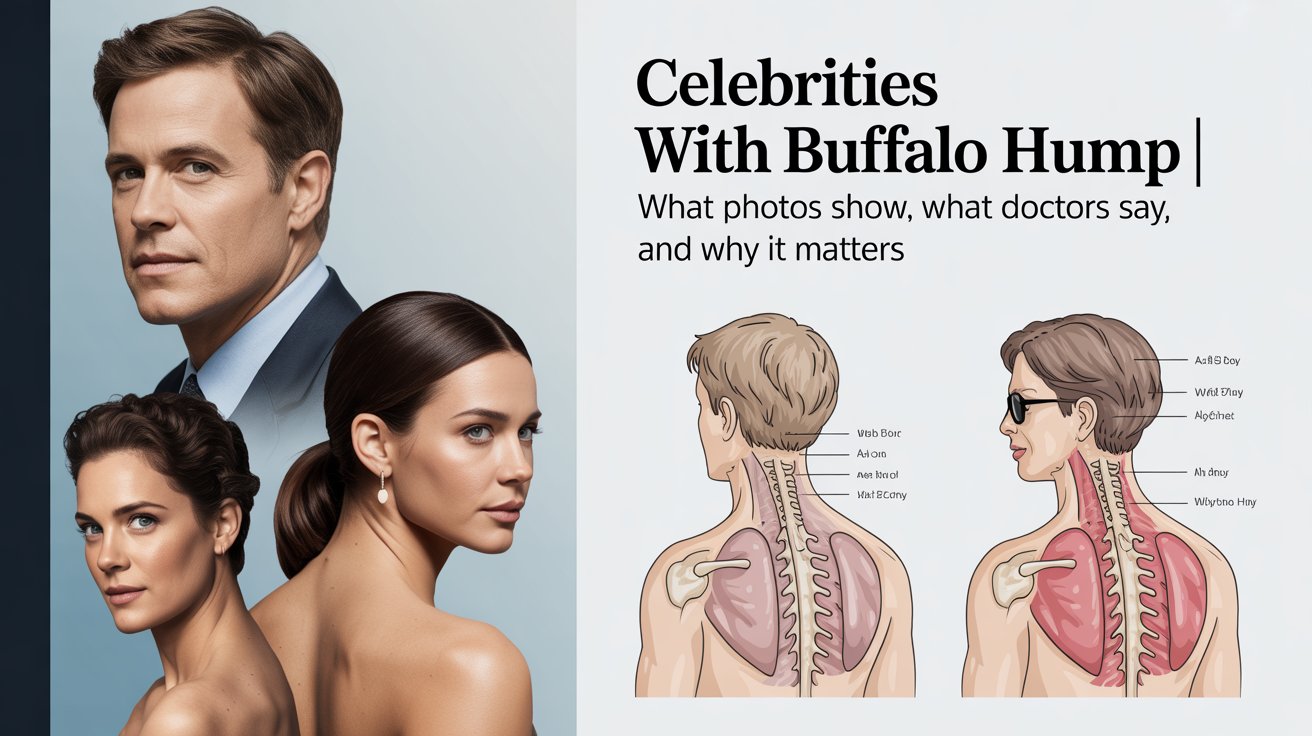
A sensible takeaway for readers curious about Celebrities With Buffalo Hump
The visible hump on a neck can be a cosmetic detail, a posture issue, a medication side effect, or a symptom of hormonal disease. Photographs and listicles name names because the images are attention-grabbing, but naming is not the same as diagnosis. When public figures make medical disclosures, they give reporters a basis to educate; when they do not, the safest approach is observation plus medical context rather than assertion. That approach keeps the story useful to readers and fair to the people photographed.
If you are personally concerned about a dorsocervical fat pad, the responsible step is to consult a clinician who will review medication history, order focused hormone testing when indicated, and consider posture assessment. Self-diagnosis based on a photograph is unreliable and can cause unnecessary worry. Treatment is straightforward in many cases once the cause is known, so early professional evaluation is worth the time. The journalism around the issue should point readers to those medical facts.
For readers who want examples, names that commonly appear in public lists include Jennifer Aniston, Halle Berry, Cameron Diaz, Jennifer Hudson, Justin Bieber, Kim Kardashian, Emma Watson, Alyssa Milano, and others. Some of those names appear on reputable listicles and many appear in tabloid pages; the presence of a name on a list does not prove a medical diagnosis. Amy Schumer is a verified case where a hormonal condition was publicly discussed and that disclosure changed the tone of reporting. Treat lists as starting points for inquiry, not as clinical evidence.
A final word for editors and readers: curiosity can be taught into care instead of cruelty. When coverage of Celebrities With Buffalo Hump is anchored to reputable medical sources, when it resists casual diagnosis, and when it respects privacy, the result is better journalism and less harm. That is a simple standard, and it is one the press can meet without sacrificing attention or clicks.