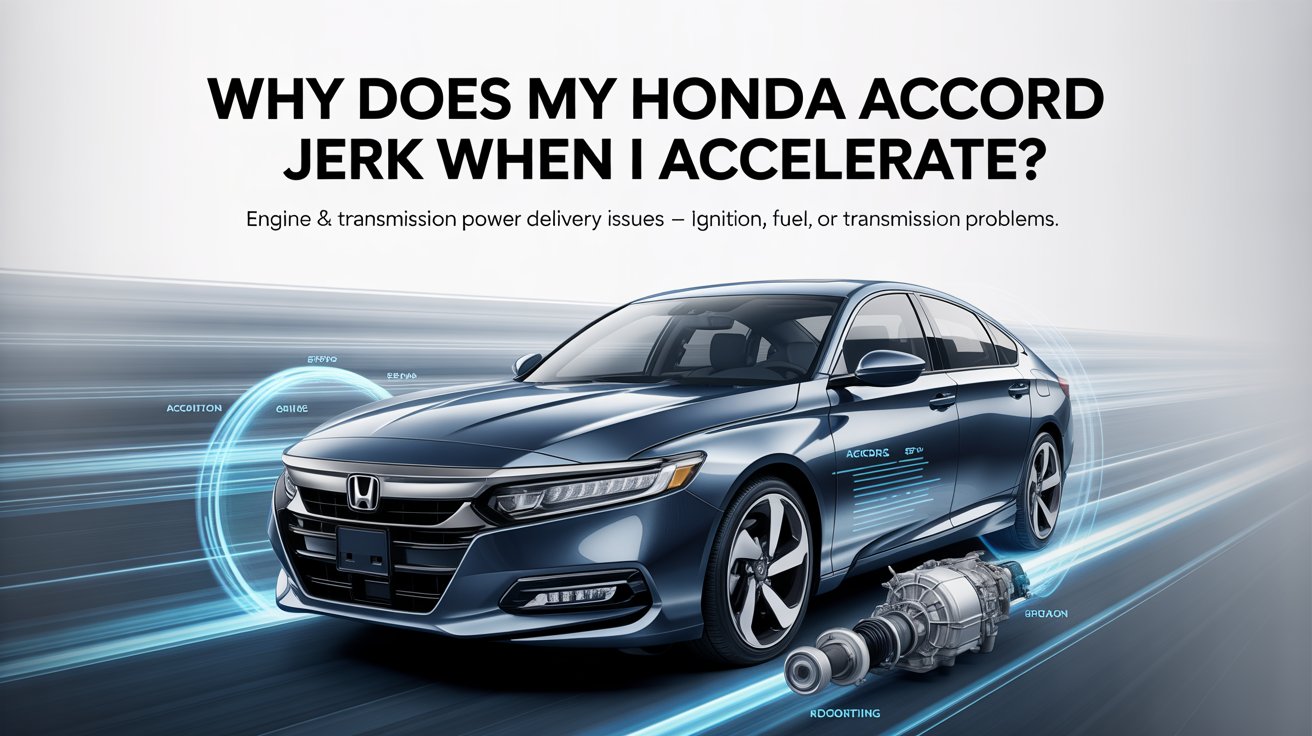
Yes! If your car jerks when you press the gas, it usually means the engine or transmission is not delivering power smoothly. Most often that’s caused by ignition or fuel delivery problems, or by a transmission hiccup on certain Accord models. Read on for a clear checklist and what to try next.
What’s actually happening when your Accord bucks or jerks
When you stomp the accelerator the engine should increase power smoothly. A jerk means one cylinder or one system missed its beat, then the rest caught up. That feels like a quick lurch or a stutter.
Sometimes it’s a classic engine misfire. Other times the transmission is slipping or the CVT is hesitating while deciding how to deliver power. The feeling you notice tells you which side to inspect first.
If it’s intermittent and comes with fluctuating RPMs you’re likely looking at ignition, fuel, or sensor problems. If it happens mostly between certain speeds it can point toward transmission or torque converter issues.
If you’re curious how power delivery and driving behavior change in electric vehicles, this breakdown on Do The Driving Modes In Cadillac Lyriq Offer Different Ranges Or Battery Usages? explains how different modes affect performance and efficiency in a modern EV.
Common culprits you should know about
Worn or fouled spark plugs and ignition coils cause misfires and are the most common cause of jerking under throttle. They’re cheap to inspect and replace.
Dirty fuel injectors, a clogged fuel filter, or a weak fuel pump can starve the engine when you demand power. That sudden lack of fuel shows up as a hesitation or a lurch.
Airflow problems like a dirty throttle body, clogged air filter, or faulty mass airflow sensor can upset the air/fuel ratio and cause stumbling during acceleration. Simple cleaning often helps.
On some Accords, especially older CVT models, a transmission control or hardware issue creates a judder or surge at light acceleration. Honda has published service bulletins for this behavior on specific years.
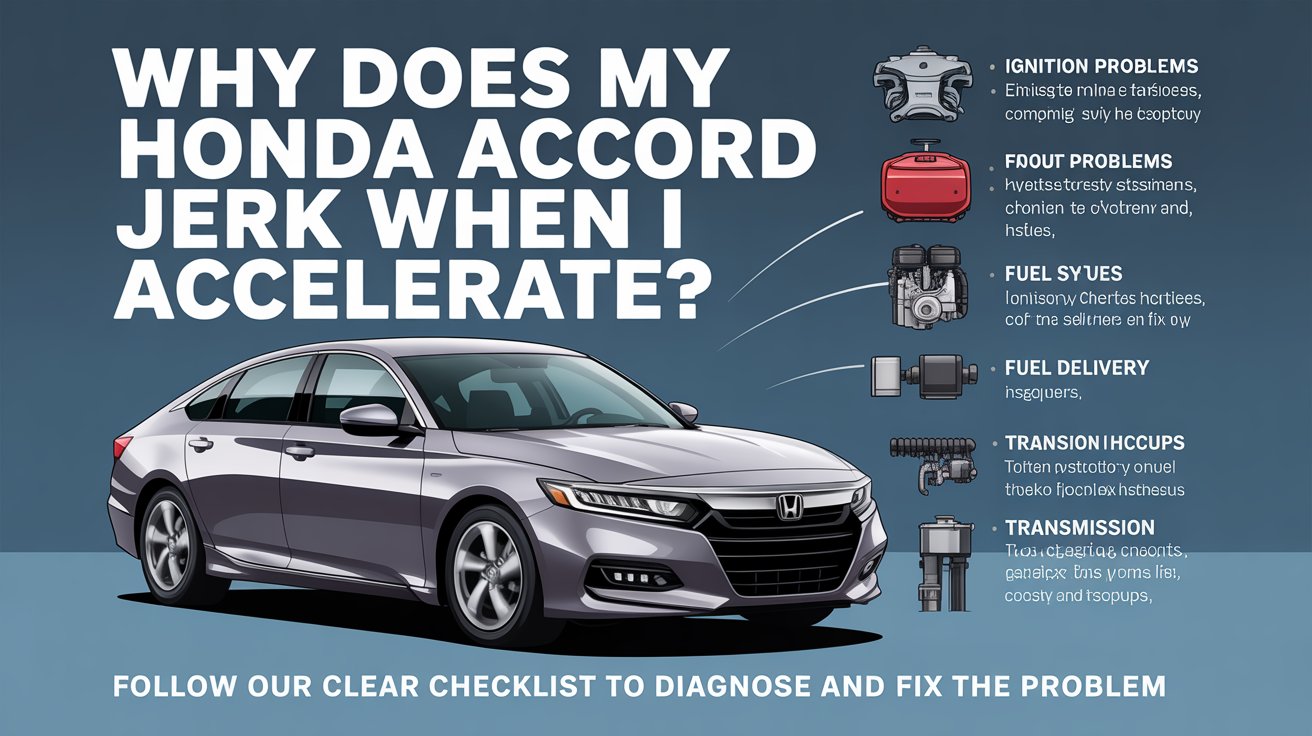
How to quickly check what’s wrong at home
First, see if the Check Engine Light is on and, if so, read the codes with an OBD2 scanner. Codes narrow the problem quickly. Even if the light is off, stored pending codes can be telling.
Listen and feel. Jerks that happen only when the engine hunts or RPMs drop point to misfires. Jerks that feel like the whole drivetrain shimmies may be transmission related. Note when and at what speeds it happens.
Visually inspect plugs and wires. Pull one plug to see if it’s fouled. Check the air filter. Smell the exhaust for raw fuel which suggests incomplete combustion. These are cheap, fast checks that often point you in the right direction.
If it’s the engine or fuel system — what to do next
Replace worn spark plugs and swap any suspect ignition coils first. A single bad coil will produce the exact jerking you describe. This fix often eliminates the issue overnight.
Use a fuel injector cleaner or have the injectors professionally cleaned if they’re gummed up. Replace the fuel filter if it’s old. Low pressure or clogged passages cause hesitation under load.
Clean the throttle body and the mass airflow sensor. Carbon buildup on the throttle plate changes throttle response and makes the car stutter at light throttle. A clean throttle body restores smooth initial power delivery.
If the transmission seems to be the issue
If the jerk feels like a transmission surge or judder, and it occurs in a narrow speed band, suspect the CVT or torque converter engagement. Certain Accord model years had documented judder problems that required valve body or software updates. Dealers have service procedures for this.
Before any heavy work ask the shop to check transmission fluid color and level. CVT fluid that’s dark or smells burnt means degraded lubrication and control. A proper CVT fluid service and TCM reflash sometimes fixes the symptom.
If the problem persists after fluid/service updates, the start clutch or valve body may need replacement. That is more involved but it’s a known repair on affected Accords.
When to DIY and when to see a pro
You can DIY spark plugs, air filter, throttle cleaning, and adding a fuel injector cleaner. Those are low risk and often solve the problem. Record what you tried so a mechanic has a head start.
Bring it to a professional if the OBD2 scan shows transmission or multiple misfire codes, if fluid smells burnt, or if the jerking continues after basic fixes. Transmission diagnostics and CVT hardware work need specialty tools.
If your Accord is from a year with a known TSB, ask the dealer whether your VIN is covered and if any software or valve body updates were applied. Dealers will replicate the symptom and apply the manufacturer fix when appropriate.

Preventing jerking in the future
Follow a simple maintenance schedule. Replace spark plugs on the recommended interval, use quality fuel, and keep filters clean. Regular fuel system and intake cleaning prevents most throttle hesitation.
For CVT cars stick to Honda’s fluid recommendations and service intervals. Using the wrong fluid or skipping CVT service accelerates wear and can lead to juddering.
Keep an OBD2 scanner or local shop check handy. Catching small misfires or sensor issues early avoids bigger repairs and keeps your Accord feeling smooth.
Final steps: a short troubleshooting plan
- Scan for trouble codes and note the symptoms.
- Inspect and if needed replace spark plugs and coils.
- Clean the throttle body and MAF.
- Try a fuel injector cleaner and consider a fuel filter change.
- If the feeling points to the transmission, check fluid and ask about Honda TSBs for your model year.
For a lighter take on vehicle control and unexpected movement, the piece on Drivingmadio Do A Barrel Roll 2 Times looks at how extreme maneuvers and sudden motion play out in high-stress driving situations.