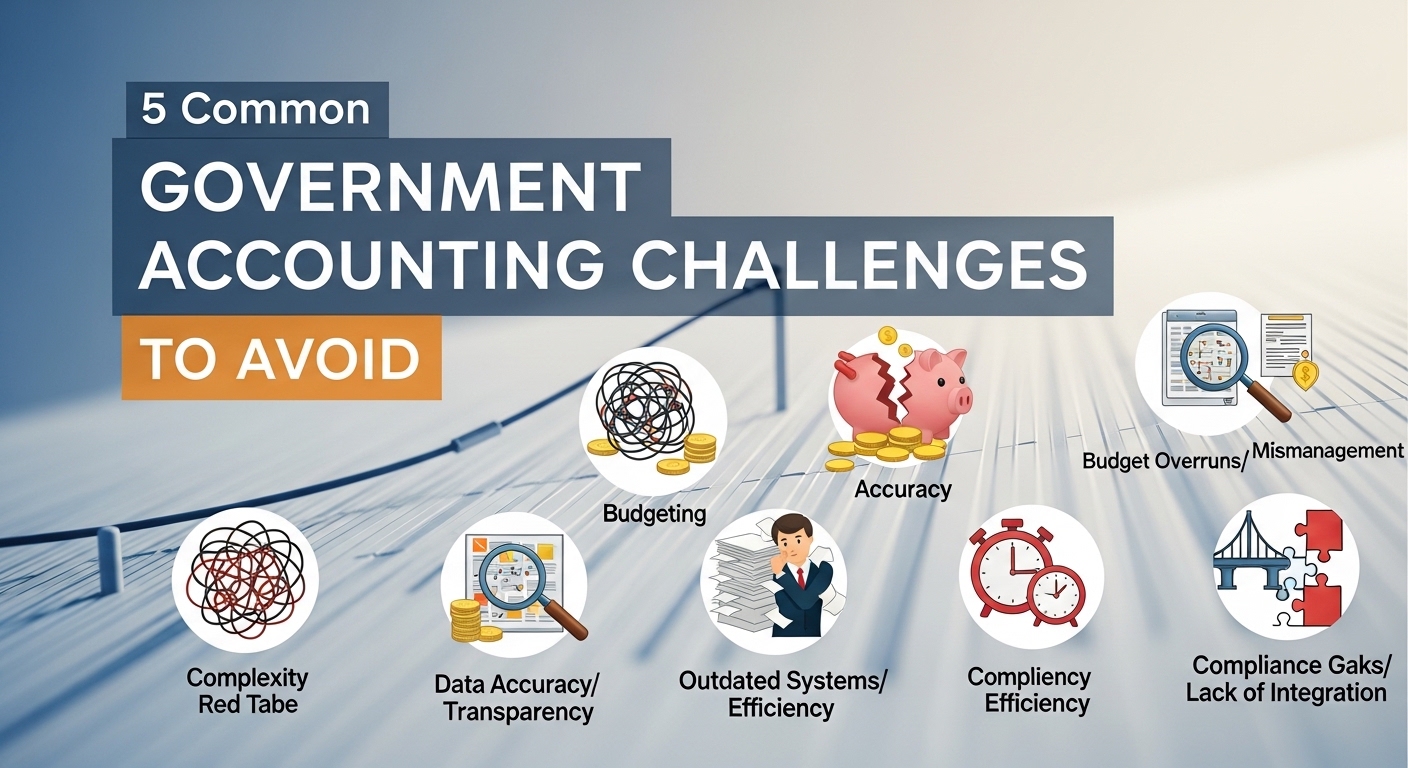
Government accounting operates in a world of its own, one filled with regulations, stakeholder scrutiny, and budgetary constraints that would make most private sector accountants’ heads spin. Public sector financial professionals face a unique combination of strict compliance requirements and limited resources, all while managing the public’s money under constant watchful eyes. The stakes? They’re incredibly high. Understanding where things typically go wrong can mean the difference between smooth operations and costly mistakes that erode public trust.
Challenge 1: Navigating Complex Regulatory Compliance Requirements
The regulatory landscape for government accounting resembles a constantly shifting maze. Between GASB pronouncements, federal regulations, and state-specific requirements, there’s a lot to keep track of, and it’s always evolving. What worked last year might not cut it this year, making it tough for accounting teams to stay ahead of the curve, especially when they’re already stretched thin or dealing with staff turnover. The real kicker? The consequences of getting it wrong can be brutal.
Smart organizations don’t wait for problems to find them. They invest in ongoing training for their teams, stay subscribed to professional updates, and aren’t afraid to bring in specialists who live and breathe government accounting standards. Creating a compliance calendar that maps out all the important dates and assigning specific team members to monitor regulatory changes makes a world of difference. It’s also worth establishing robust internal controls and review processes, these safeguards ensure that financial statements accurately reflect what the governing bodies require.
Challenge 2: Managing Fund Accounting Complexity and Segregation
Here’s where government accounting really sets itself apart from the private sector. Instead of maintaining one tidy general ledger, government organizations juggle multiple funds, each with its own revenue sources and spending restrictions. It’s necessary to ensure resources get used exactly as intended, whether that means following legal requirements, honoring donor restrictions, or supporting specific programs. But let’s be honest: managing all these funds at once creates plenty of opportunities for things to go sideways.
Staff members might accidentally charge expenses to the wrong fund, or worse, they might not realize they’ve run a particular fund dry until it’s too late. Things get even trickier when money moves between funds, requiring meticulous documentation and reconciliation to keep everything straight. The solution? Organizations need accounting systems purpose-built for fund accounting, complete with controls that stop inappropriate transfers before they happen. Regular training helps too, when both accounting staff and program managers understand fund restrictions and proper coding procedures, everyone’s on the same page.
A well-designed chart of accounts provides the structure needed to keep everything organized, clearly identifying fund types, departments, and expenditure categories. Monthly reconciliations of all funds, paired with variance analysis, act like an early warning system. They help spot discrepancies while they’re still manageable, long before they complicate year-end reporting or turn into audit headaches.
Challenge 3: Inadequate Internal Controls and Separation of Duties
Smaller municipalities and special districts often face a tough reality: limited staff means limited options for separating duties properly. When one person handles multiple steps of a financial transaction, approving purchases, receiving goods, and processing payments, risk shoots up dramatically. Errors become more likely, and unfortunately, so does the potential for fraud. The problem intensifies during vacations or staff absences, when remaining team members take on extra responsibilities without adequate oversight watching their backs.
Weak internal controls open the door to all sorts of problems: unauthorized spending, missing assets, duplicate payments, and other financial irregularities that damage public trust and guarantee unfavorable audit findings. Government entities need to conduct thorough risk assessments, identifying exactly where their control weaknesses lie. When complete separation of duties just isn’t feasible, and let’s face it, sometimes it’s not, compensating controls become essential.
Approval workflows, mandatory reviews, and automated system controls provide additional safeguards even when resources are tight. Regular internal audits or reviews by independent parties catch control deficiencies before they snowball into significant losses. But here’s something that often gets overlooked: creating a culture where people actually care about these controls matters just as much as the controls themselves. When staff understand why internal controls exist and feel comfortable reporting concerns, the organization’s financial integrity gets a powerful layer of protection that policies alone can’t provide.
Challenge 4: Budget Preparation and Variance Management Difficulties
Government budgeting is a high-wire act. Organizations must balance public service demands against limited revenues that can be frustratingly unpredictable. Revenue forecasting becomes particularly challenging when economic conditions shift unexpectedly or when you’re counting on intergovernmental transfers that might change with the political winds. On the expenditure side, projections can miss the mark when organizations overlook salary increases, rising benefit costs, or unexpected maintenance needs for aging infrastructure that’s been limping along for years.
Once budgets get adopted, the real work begins: tracking actual performance against those carefully crafted projections requires constant attention and timely reporting. Some organizations struggle here, lacking the systems or processes to generate meaningful variance reports that actually explain why reality diverged from expectations. Without this crucial information, leaders find themselves making decisions in the dark, unable to determine when budget amendments are necessary or when programmatic adjustments need to happen. When preparing budgets and managing complex compliance requirements, professionals who need to navigate GASB standards and federal regulations often rely on specialized government accounting services to ensure accuracy and regulatory adherence.
Creating realistic budgets requires digging into historical data, gathering input from department managers who understand operational needs firsthand, and keeping an eye on economic trends that might impact revenues or costs. Monthly budget-to-actual reporting with clear explanations for significant variances keeps everyone informed and enables proactive management rather than reactive crisis control. Building appropriate contingency reserves and maintaining some flexibility within budget categories gives organizations breathing room to respond to unexpected circumstances without compromising essential services or violating budgetary restrictions.
Challenge 5: Asset Management and Depreciation Tracking Shortcomings
Government entities typically own impressive amounts of capital assets, buildings, infrastructure, vehicles, equipment, all of which must be properly recorded, tracked, and depreciated according to GASB standards. Sounds straightforward, right? In practice, many organizations struggle to maintain accurate asset inventories, particularly for smaller items that get moved between departments or disposed of without anyone bothering to update the records. Without a comprehensive fixed asset system, governments risk overstating or understating their asset values, miscalculating depreciation expense, and completely missing obsolete or vanished items.
Infrastructure assets present their own special brand of challenges. These long-lived assets require significant maintenance investments and don’t come with readily available market values for comparison purposes. The modified approach allowed under GASB standards sounds helpful in theory, but it requires extensive documentation of preservation efforts and condition assessments that many entities find overwhelming to maintain year after year.
What’s the answer? Organizations need robust asset management systems that track every acquisition, disposal, transfer, and depreciation calculation for all capital assets. Conducting periodic physical inventories and reconciling them to accounting records helps identify discrepancies before they become major problems. Establishing clear capitalization thresholds and useful life estimates based on professional judgment and industry standards ensures consistent treatment when new assets come on board. Comprehensive asset management policies that address everything from tagging and tracking to disposal authorization and reporting requirements create accountability throughout the organization and support accurate financial reporting that stands up to scrutiny.
Conclusion
Investing in staff training, modern accounting systems, and professional guidance might seem expensive upfront, but the payoff comes through more accurate reporting, fewer audit findings, and better-informed decision-making that serves everyone involved. By recognizing these challenges for what they are and implementing thoughtful solutions, government entities can fulfill their fiduciary responsibilities while effectively serving their communities and stakeholders, which is, after all, what it’s all about.