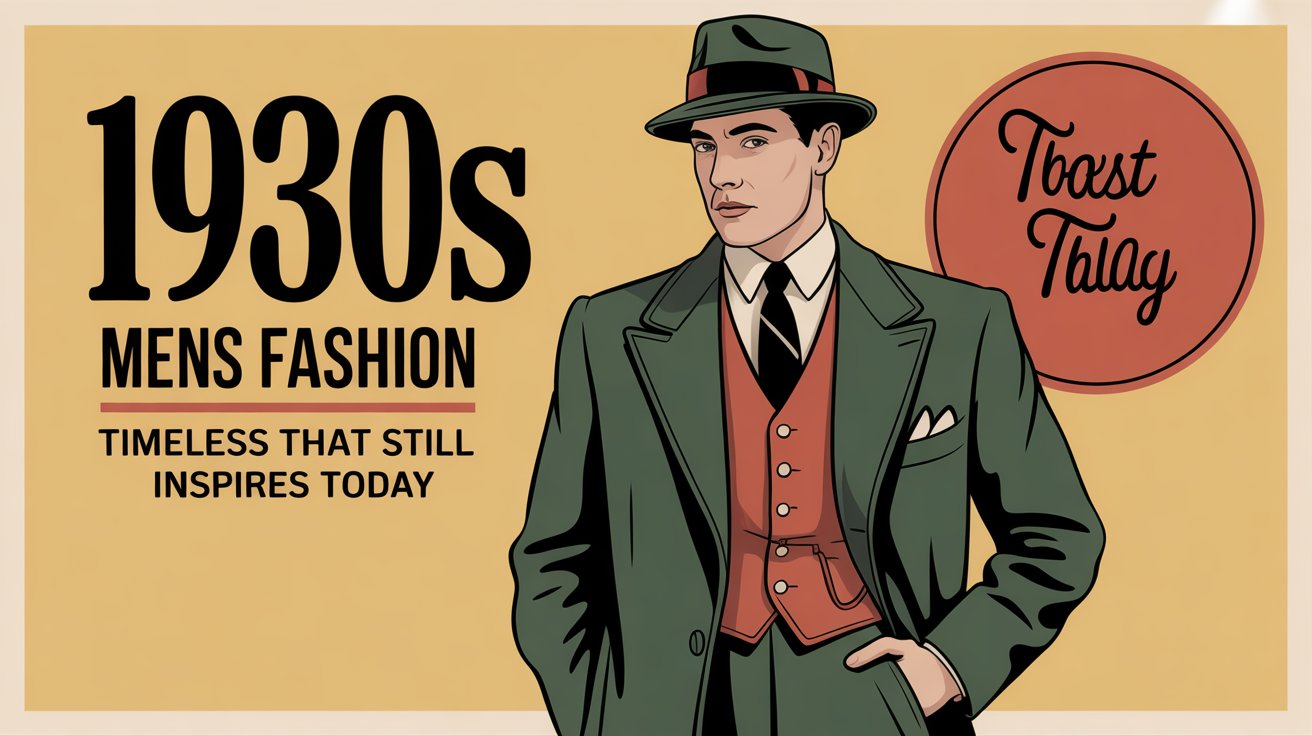
The 1930s mens fashion scene was a blend of elegance, practicality, and timeless class. Even in the shadow of the Great Depression, men dressed with purpose — every piece had meaning, every detail carried style.
The Core Look of the 1930s
Men’s clothing in the 1930s had structure. Wide shoulders, narrow waists, and straight trousers shaped the decade’s silhouette.
- Suits were the backbone of everyday wear.
- Jackets had padded shoulders and a slightly nipped waist.
- Trousers had higher waists and full legs, tapering toward the ankle.
Why this silhouette?
Because it gave men a stronger, confident look — something people craved during hard times.
Fabrics and Colors That Ruled
1930s mens fashion leaned on rich but practical fabrics. Wool was king for suits, while tweed was favored for casual wear. Lighter fabrics like linen appeared in summer.
Common colors:
- Deep navy
- Charcoal grey
- Brown and tan
- Pinstripes for a bolder edge
Why darker shades?
They were versatile, formal enough for work, and forgiving when clothing had to last longer.
Shirts and Ties: Small Details, Big Impact
Shirts were often white or pale-colored with pointed collars. Some had spearpoint collars — long, narrow, and very 1930s.
Ties were where personality showed:
- Geometric patterns
- Stripes
- Art Deco influences
Why were ties so expressive?
They were one of the few affordable ways to refresh a look without buying a whole new suit.
The Overcoat and Outerwear Game
Outerwear in 1930s mens fashion wasn’t just for warmth — it was part of the outfit. Trench coats, double-breasted wool coats, and belted overcoats were popular.
Why so much variety?
Because coats were worn daily in public, making them as important as the suit underneath.
Hats: The Finishing Touch
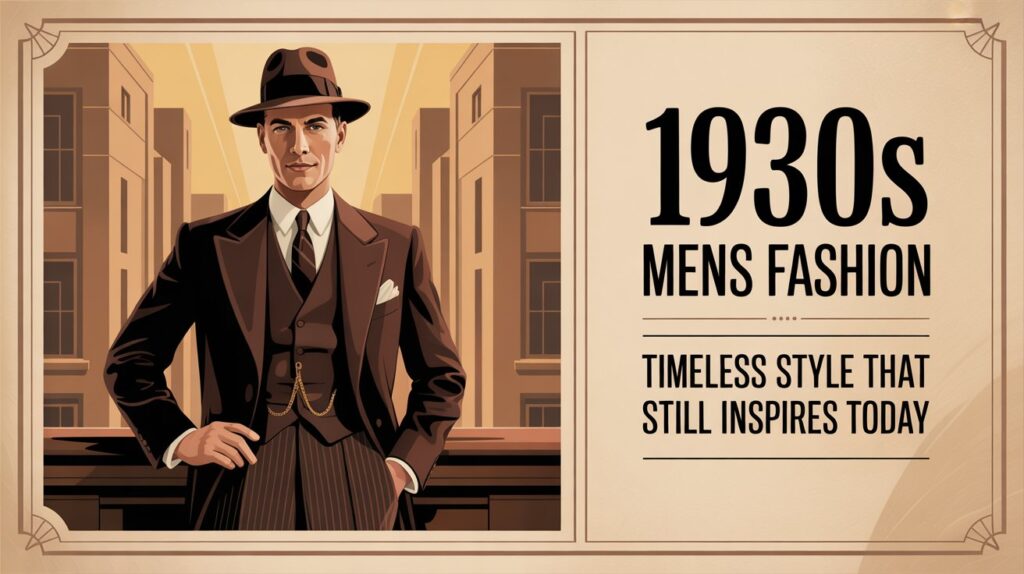
A man in the 1930s rarely left the house without a hat. Fedoras were the standard, but homburgs and flat caps also made appearances.
Why the hat culture?
It wasn’t just fashion — it was etiquette. Hats signaled respect and social awareness.
Footwear That Meant Business
Black and brown leather oxfords dominated. Brogues with subtle perforations added personality. In casual settings, two-tone spectator shoes were the bold choice.
Why so polished?
Shoes were a direct reflection of a man’s care for himself — a worn-out pair could ruin the whole look.
Casual Wear: Still Refined
Even casual clothing had structure. Sports coats paired with slacks, knitted sweaters, and collared shirts created a “relaxed but proper” style.
Why no true streetwear?
Because leisure clothing still had to keep a man presentable in public — comfort didn’t excuse sloppiness.
Hollywood’s Influence
The silver screen had a huge impact on 1930s mens fashion. Actors like Clark Gable and Cary Grant turned tailored suits into cultural icons.
Why did movies matter so much?
During the Depression, films were escapism — audiences copied the elegance they saw on screen.
Accessories: Small but Powerful
Pocket squares, cufflinks, tie bars, and leather gloves were subtle but essential. They gave depth to an outfit without overwhelming it.
Why invest in accessories?
Because they could make the same suit look fresh in different ways.
Lessons From the 1930s That Still Work Today
- Invest in well-fitted suits.
- Keep colors versatile and timeless.
- Let accessories carry your personality.
- Treat outerwear as part of your look, not an afterthought.
Why does this matter now?
Because 1930s mens fashion proves that style isn’t about having more — it’s about making the most of what you have.